Choosing the right butcher block top for a kitchen island involves balancing durability, size, and aesthetics. The following selections highlight solid wood construction, finish options, and practical features that support everyday cooking, prep, and entertaining. Each option brings a distinct style—from rustic farmhouse to modern minimalism—while delivering the warmth and functionality that butcher block surfaces provide.
| Product | Brand | Size (LxW) | Material |
|---|---|---|---|
| Homestyles Orleans Kitchen Island | Homestyles | 52″W | Butcher block top |
| Bme Hevea Solid Wood Island Countertop | Bme | 72″L x 39″W | Hevea wood |
| Howizz Walnut Butcher Block Countertop | Howizz | 60 x 36 in | Acacia/Walnut finish |
| AllForWood Butcher Block Countertop | AllForWood | 72″L x 25″W | Hevea wood |
| Home Aesthetics Rolling Kitchen Island Cart | Home Aesthetics | Varies (cart) | Bamboo butcher block |
Below are five top picks that align with the needs of modern American kitchens: sturdy construction, appropriate thickness, liveable pricing, and straightforward maintenance. Each entry includes a direct product link, a quick image reference, and key features to help you compare at a glance.
Homestyles Orleans Kitchen Island With Butcher Block Top

The Homestyles Orleans Island combines a durable butcher block surface with a robust metal frame designed for strength and corrosion resistance. Its 52-inch width makes it a versatile centerpiece for mid-sized kitchens, offering a warm, natural surface for cutting, rolling dough, and food prep. Open storage underneath enhances organization, letting you optimize utensils, bowls, and small appliances without cluttering the countertop.
Bme Hevea Solid Wood Butcher Block Island Countertop

This unfinished, solid Hevea wood top emphasizes durability and classic grain. The 72″ length and 39″ width provide substantial workspace for large kitchens or islands used for meal prep and casual dining. The packaging is designed to prevent warping during transport, which is helpful for DIY installs. The unfinished surface invites your preferred coating, stain, or oil, letting you tailor the finish to your space.
Howizz Walnut Butcher Block Countertop

Made from 100% solid Acacia with a walnut oil finish, this countertop delivers a warm, elegant tone that highlights natural grain. It’s designed for island use, desk tops, or dining tables, with multilayer packaging to minimize warping during delivery. The thickness and durable construction make it a reliable surface for heavy chopping, rolling, and daily kitchen tasks while adding a refined look to the island.
AllForWood Solid Wood Butcher Block Countertop

AllForWood’s 1.5-inch thick butcher block is crafted from solid Hevea wood, offering substantial feel and long-lasting stability. The unfinished surface enables full customization through staining or oiling. A square edge design adds a contemporary touch that pairs well with both rustic and modern kitchen aesthetics. The top is available in longer lengths to fit island configurations and workspaces that demand robust support under heavy use.
Home Aesthetics Rolling Kitchen Island Cart
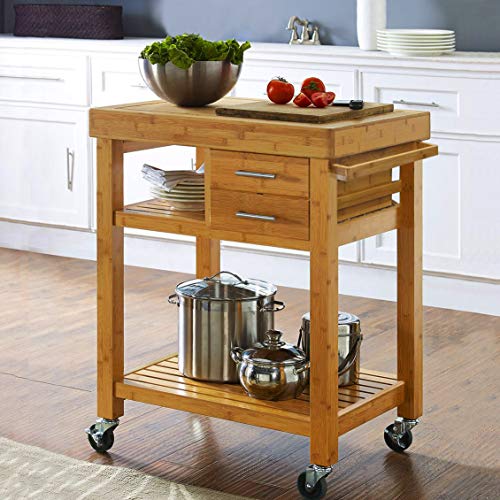
This rolling cart combines mobility with a butcher-block top crafted from bamboo, offering a sustainable option that’s smooth under knives and pans. It includes drawers and a towel rack, plus a side rack for utensils or aprons, giving you practical storage for prep extras. The compact design fits smaller kitchens or as an additional prep area in larger layouts, ensuring flexible, portable functionality.
Buying Guide: Key Considerations For Choosing A Butcher Block Island Top
Material durability and finish are central. Hevea wood, Acacia, and bamboo each bring distinct hardness, grain patterns, and maintenance needs. Hevea is known for strong, resilient boards that respond well to DIY finishing, while Acacia provides a rich, warm grain that stands up to daily use. Bamboo offers excellent hardness with a sustainable edge, though it can differ in color tones compared to traditional hardwoods.
Size and thickness matter for island integration. A top around 1.5 inches thick typically delivers solid support for meal prep and casual dining, while longer, wider boards expand the usable surface. Consider whether you need predrilled holes, edge profiles (square vs. eased), and any overhangs for seating or stools.
Finish and maintenance influence long-term upkeep. Unfinished surfaces offer customization but require ongoing oiling or sealing to prevent staining and moisture damage. Pre-finished surfaces may be easier to care for but limit finish options. If you expect heavy chopping, choose durable, closed-grain woods with good edge stability and moisture resistance.
Storage and mobility add practicality. Islands with built-in storage or open shelving can reduce countertop clutter, while rolling carts increase flexibility for kitchens with multifunctional layouts. Assess leg and frame construction for stability, weight capacity, and ease of maneuvering on different floor types.
Installation and delivery handling should be considered. Unfinished boards often ship with protective packaging to prevent warping; check for packaging details and return policies. Also verify whether the top is designed to rest on existing cabinetry or requires mounting hardware to the island frame.
Style alignment with kitchen interior matters. Rustic farmhouse, modern minimal, and traditional country styles each pair with different wood tones and finishes. Lighter woods can brighten a compact space, while darker tones deliver dramatic contrast in larger areas. Measure your space to ensure a cohesive look with surrounding cabinetry and flooring.
Purchase considerations include budget, lead times, and availability. While mid-range options balance cost and quality, premium solid-wood tops offer longer lifespans and easier customization. Review warranty terms and care recommendations from manufacturers to protect your investment over time.