Selecting a water softener for homes that rely on a septic system requires balancing effective hardness reduction with septic safety. This guide highlights five highly rated options that suit different households, from traditional salt-based softeners to salt-free descalers. Each product section covers capacity, standout features, and how it aligns with septic-system performance. Use the buying guide below to compare approaches, installation needs, maintenance, and long-term value for family homes, rural properties, and vacation houses alike.
| Product | Brand | Capacity (Grains) | Type |
|---|---|---|---|
| Aquasure Harmony 50K | Aquasure | 50,000 | Salt-Based Softener |
| AO Smith Descaler | AO Smith | Descale Only | Salt-Free Descaler |
| iSpring WCS45KG | iSpring | 45,000 | Salt-Based Softener |
| Aquasana SimplySoft 40K | Aquasana | 40,000 | Salt-Based Softener |
| Kenmore 350 | Kenmore | 32,000 | Salt-Based Softener |
Aquasure Harmony 50K Grain Water Softener

The Aquasure Harmony Series softener is designed for households with 4–6 bathrooms and treats up to 50,000 grains of hardness. It removes calcium and magnesium that can cause mineral buildup, skin irritation, and appliance wear. The system also features a triple-purpose sediment/GAC/Zinc pre-filter that removes 99% of contaminants such as chlorine, VOCs, PFAs, odors, taste, soil, silt, sand, and rust. By reducing scale buildup, it protects plumbing and major appliances like dishwashers and water heaters. The digital metered control head ensures efficient regeneration to balance ongoing water quality and salt use, making it suitable for larger families seeking steady performance.
From a septic perspective, this option offers robust hardness removal and a filtration stage that can improve overall water quality entering the septic system. Regular maintenance and correct brine settings help minimize salt waste and prevent excessive discharge. For homes with higher daily water use, the Harmony 50K provides reliable performance without rapid fluctuations in water softness. Overall, it combines strong mineral removal with a built-in filtration layer to support long-term system health.
AO Smith Salt-Free Descaler System

AO Smith’s Salt-Free Descaler offers a non-softening, chemical-free approach to preventing scale buildup. It does not remove minerals that cause hardness but is designed to reduce scaling in pipes and fixtures. Suitable for moderate hardness (generally under 15 gpg) with alkalinity under 250 mg/L and pH under 8.3, the system is intended for households of four or more. It works across drinking, cooking, showering, and bathing without salt bags or electricity. For septic systems, the lack of added salt can be advantageous, and users should recognize that this is a descale solution rather than a true hardness reduction.
While it preserves minerals, it does not decrease total dissolved solids (TDS) or remove iron or sulfur. The descaler is a low-maintenance option with a long-run capability, marketed for up to six years or up to 600,000 gallons of treated water. It can be a fit for homes seeking a salt-free approach to limit salt discharge while still reducing scaling issues in plumbing and plumbing fixtures.
iSpring WCS45KG Whole House Water Softener
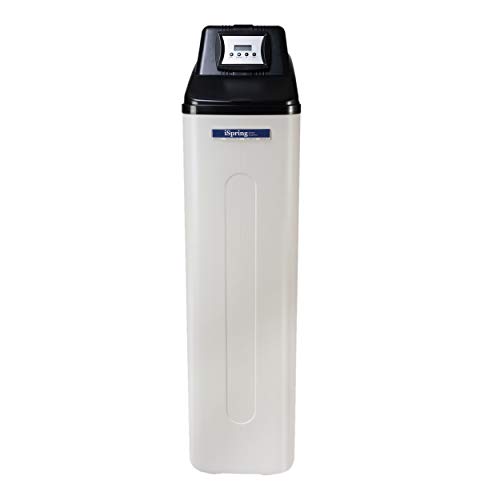
The iSpring WCS45KG is a high-capacity 45,000-grain whole-house softener designed for homes and small to mid-size businesses. It’s SGS-tested to remove up to 99.43% of hardness-causing minerals, delivering softened water to every faucet, shower, and appliance. The one-tank design is compact, saving space while still providing robust performance. It supports an economical, customizable treatment plan by allowing hardness adjustments and flow considerations, helping balance salt use with household demand. This model is suitable for households seeking strong hardness reduction without extensive footprint or complex installation.
From a septic standpoint, the WCS45KG’s efficient design can help minimize scale-related buildup in pipes without compromising flow. Proper regeneration scheduling and salt management remain important to prevent excessive salt discharge. The system’s compact form factor makes it convenient for installations in utility rooms or closets, and its adjustability helps tailor performance to changing family needs over time.
Aquasana SimplySoft 40,000 Grain Water Softener

Aquasana SimplySoft 40,000 Grain Water Softener provides whole-house softening for homes with up to four to five bathrooms. It focuses on reducing minerals that cause hard water and scale, delivering soft water from every tap. The IAPMO certified system reduces hardness and is designed to improve skin feel, hair health, and cleanliness of dishes and glassware. The base tank and cabinet emphasize long-term reliability, and the system is associated with a durable warranty and customer support options. It’s positioned as a straightforward, dependable choice for moderate-sized homes seeking consistent soft water quality.
In terms of septic compatibility, Aquasana’s SimplySoft approach aims to balance mineral reduction with simple maintenance. Salt-based systems do introduce salt into the environment, which some septic guidelines caution as a consideration; salt-free or descaler alternatives may be preferred in certain setups. This model is a solid middle-ground option for households wanting reliable softness with a solid warranty and established support.
Kenmore 350 Water Softener

The Kenmore 350 softener handles hardness reductions up to 90 GPG and can address clear-water iron up to 8 PPM. With a 32,000-grain capacity, it aims to deliver reliable soft water for typical family homes. IntelliSoft technology helps adjust to your water needs, reducing salt, water, and energy usage while ensuring you never run out of soft water. The compact design makes installation feasible in tighter spaces along incoming water lines, making it a convenient choice for retrofit projects or smaller homes seeking efficient performance without bulk.
For septic systems, the Kenmore 350’s conventional salt-based operation requires attention to salt usage and discharge. Proper brine cycle management and periodic regeneration are essential to minimize salt waste. The compact footprint and adaptive technology contribute to a balanced, long-term solution for households that value both performance and space efficiency.
Buying Guide
Salt-Based Versus Salt-Free: What Works Best With Septic Systems
Salt-based ion-exchange systems remove minerals but introduce salt into wastewater, which some septic guidelines caution. They often provide stronger hardness reduction and may support higher daily water usage, but require regular salt replenishment and brine management. Salt-free descalers do not soften water; they reduce scaling and are generally lower maintenance, with minimal salt discharge. For septic systems, salt-free options may be appealing, but they won’t eliminate hardness entirely. The best choice depends on your water hardness, household size, and local septic considerations. Consulting a plumber or septic professional is recommended before selecting a long-term approach.
Household Size, Water Hardness, And Flow Needs
- Large households with high water usage may benefit from higher-capacity salt-based systems (e.g., 45,000–50,000 grains) to maintain consistent soft water across showers, laundry, and dishwashing.
- Smaller homes or apartments with moderate hardness might be well served by salt-free descalers or smaller softeners that minimize maintenance.
- Consider peak flow and regeneration frequency; higher-flow models reduce the risk of short-term hardness spikes during busy mornings.
Installation Footprint And Plumbing Fit
- Space-saving models fit into tight utility rooms or closets and are ideal for retrofit projects in existing homes.
- One-tank designs save space but may require careful positioning to ensure easy access for maintenance.
- Check inlet/outlet connections (3/4 inch is common) to ensure compatibility with your existing plumbing.
Maintenance, Filtration, And Replacement Parts
- Salt-based systems require periodic salt refills, resin bed replacement (over long horizons), and occasional media refreshes for pre-filters and brine tanks.
- Salt-free descalers demand less ongoing maintenance but need monitoring to confirm effectiveness in your water conditions.
- Review warranty terms, service support, and availability of replacement parts in your region.
Certifications And Warranty
- IAPMO, NSF/ANSI certifications indicate compliance with industry standards for water treatment products.
- Warranty length and coverage (tank, electronics, and labor) affect long-term ownership costs and service expectations.
Quick Comparisons At A Glance
Salt-based options (Aquasure Harmony 50K, iSpring WCS45KG, Aquasana SimplySoft, Kenmore 350) offer strong hardness removal and broad applicability for busy households but require salt management and brine discharge considerations for septic systems. The AO Smith Salt-Free Descaler provides a salt-free approach focused on reducing scale rather than softening, which can be advantageous for some septic setups. Your final choice should align with your hardness level, space, maintenance preference, and local septic guidelines.