Selecting the right steel is essential for a chef knife’s performance. This guide highlights five top knives that illustrate different steel types—from robust high-carbon stainless to Damascus and premium Japanese alloys. Each knife balances edge retention, corrosion resistance, and ease of sharpening, helping cooks choose a steel that matches their kitchen routine. Use the table below to scan core steel traits at a glance, then dive into each product section for practical implications in daily cooking tasks.
| Product | Brand | Steel Type | Notable Benefit |
|---|---|---|---|
| PAUDIN 8-Inch Chef Knife | PAUDIN | High Carbon Stainless | Balanced edge; comfortable handle |
| MOSFiATA 8-Inch Pro Chef Knife | MOSFiATA | EN1.4116 High Carbon German Stainless | Ultra sharp; robust construction |
| SHAN ZU 8-Inch Damascus Chef Knife | SHAN ZU | 10Cr15Mov Damascus (67 layers) | Distinctive pattern; corrosion resistant |
| HOSHANHO 8-Inch Japanese High-Carbon Knife | HOSHANHO | 10Cr15CoMoV | Excellent edge retention |
| Global 8-Inch Chef’s Knife | Global | Mol/Van Stainless Steel | Lightweight, razor-sharp edge |
MOSFiATA 8-Inch Pro Chef Knife: German Steel Edge

The MOSFiATA knife centers on EN1.4116 high-carbon German stainless steel, offering a disciplined blend of rigidity and corrosion resistance. The blade is polished to a sharp edge designed for precise cuts across proteins, vegetables, and seafood. With a 16° per side edge, this knife remains easy to maintain while delivering clean, effortless slicing. The laser-engraved blade pattern helps reduce sticking and debris buildup, improving food release during busy kitchen prep sessions. These steel properties support long-term durability under frequent use in both home and professional kitchens.
Construction emphasizes a full tang and an ergonomic handle choice. The Santoprene grip offers comfortable control, while the Micarta accent and triple rivets secure the blade for long-lasting balance. This combination supports confident handling from the first cut to the final mince, making the MOSFiATA a reliable workhorse for daily prep, even in high-demand environments where repeated sharpening is common.
SHAN ZU 8-Inch Damascus Chef Knife
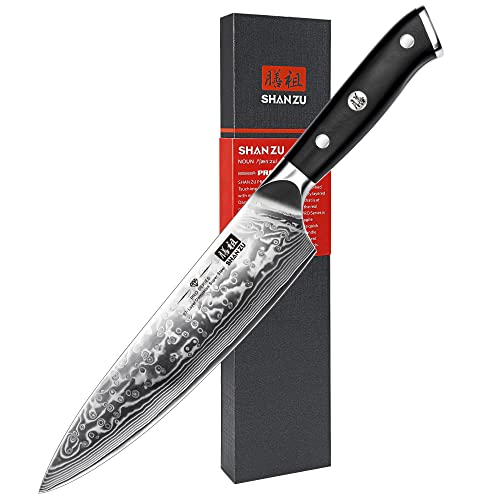
SHAN ZU’s Damascus chef knife centers on a core of 10Cr15Mov Japanese steel, layered into a Damascus pattern through extensive forging. The blade achieves high hardness around 62 HRC and offers strong corrosion resistance, supporting consistent edge retention through tough chopping, slicing, and mincing tasks. The 67-layer construction provides a distinctive grain that enhances durability and resists chipping during routine kitchen use. The knife is designed to deliver reliable performance for long-term cooking projects, with a focus on a robust, sharp edge that stays true through repeated sharpening.
What sets this knife apart is the emphasis on a true Damascus finish formed by real layered steel, not laser etching. The resulting blade is designed to resist rust and wear while maintaining a balanced feel in the hand for precise cuts. Its geometry supports steady push cuts and clean slices across vegetables, fish, and meats, making it a strong option for cooks who value both aesthetics and steel performance in daily tasks.
Amazon Basics Classic 8-Inch Full Tang Chef’s Knife

The Amazon Basics Classic 8-Inch Chef’s Knife is built with a high-carbon stainless steel blade designed for versatile kitchen work. The satin-finish blade resists stains, rust, and pits, making it a practical choice for everyday chopping, dicing, and mincing. A full tang construction plus three rivets provides balanced heft and stability, supporting a confident grip during long prep sessions. The user-friendly build makes it a reliable option for home cooks seeking a straightforward, durable everyday knife without compromising cutting performance.
Its balanced weight and durable construction cater to a wide range of tasks, from vegetables to proteins. The three-rivet handle ensures a secure, comfortable hold, while the full tang design distributes force evenly for controlled cuts. This knife is well-suited for kitchens where reliability and low maintenance are key, offering dependable edge retention with routine honing and periodic sharpening.
HOSHANHO 8-Inch Japanese High-Carbon Knife

HOSHANHO’s 8-Inch chef knife uses Japanese high-carbon steel, specifically 10Cr15CoMoV, to deliver a blade with strong edge retention and rust resistance. With a hardness up to 60 HRC, the blade maintains sharpness through regular kitchen use and is designed to withstand daily chopping, slicing, and precision work. The blade features a matte finish that combines modern aesthetics with practical durability, while the pakkawood handle contributes to a comfortable, balanced grip during extended prep sessions. This knife aims to provide reliable performance with a focus on long-lasting sharpness.
The ergonomics of the handle, paired with the steel’s hardness, are intended to reduce fatigue during repetitive tasks. The blade geometry supports accurate control for delicate vegetable cuts as well as more forceful chopping when needed. This model suits cooks who value a strong, high-carbon performance with a premium look and comfortable handling for frequent kitchen use.
HOSHANHO 7-Inch Nakiri Knife

The HOSHANHO 7-Inch Nakiri is crafted from Japanese high-carbon stainless steel, 10Cr15CoMoV, and is designed for precise vegetable prep. The blade hardness reaches up to 60 HRC after vacuum heat treatment, helping it maintain a sharp edge during repetitive slicing tasks. An ergonomic pakkawood handle balances the knife’s weight with the blade, enabling a comfortable grip and stable cutting motion. The Nakiri geometry excels at thin, clean vegetable cuts, making it a specialized tool for produce-focused tasks in both home and professional kitchens.
The knife’s edge is honed to deliver smooth, effortless cuts, and its steel composition supports rust resistance and long-term edge life. The combination of a precise blade angle and a comfortable handle makes this Nakiri suitable for cooks who prioritize vegetable preparation and consistent, neat slices as part of daily cooking routines.
Global 8-Inch Chef’s Knife: Lightweight Japanese Steel

Global’s 8-Inch Chef’s Knife is built with a lightweight stainless steel alloy described as molybdenum-vanadium stainless steel, commonly associated with excellent edge retention and durability. The blade design emphasizes a precise, razor-sharp edge that remains relatively easy to maintain with regular honing. The knife’s balance and slim profile suit dynamic kitchen tasks, from delicate slicing to robust chopping, while its rust-resistant steel supports steady performance in busy kitchen environments. This model is well-suited for cooks who prefer a nimble, responsive knife with enduring sharpness.
Global knives are known for their distinctive balance and comfortable grip design, designed to reduce wrist fatigue during extended prep. The blade geometry supports a controlled, light touch for vegetables and proteins alike, making this model a practical choice for professionals and home cooks seeking a premium stainless option with minimal maintenance requirements.
Buying Guide
Key purchase considerations center on steel type, hardness, edge retention, and maintenance needs. High-carbon stainless steel blends offer sharp edges with reasonable rust resistance, while Damascus or layered steels emphasize durability and visual appeal at the cost of maintenance and price. Hardness, typically measured in HRC, influences how long a blade stays sharp before re-sharpening is required. Knives in the 60–62 HRC range strike a balance between edge life and toughness for daily kitchen use.
Blade geometry and edge angle affect cutting performance. Most chef knives favor a 15–16 degree per side edge for a strong, keen edge that resists dulling during routine tasks. Handle material and contour influence comfort, control, and fatigue. Materials range from synthetic composites to natural woods; ergonomics matter for long prep sessions. Full-tang construction with secure rivets generally offers better balance and durability than partial tangs.
Maintenance varies by steel type. Stainless steels are easier to care for and resist staining, while high-carbon steels demand more attentive drying and occasional oiling to prevent rust. Sharpening approaches include whetstone honing or guided sharpeners; regular honing maintains the edge between full sharpenings. Consider your kitchen’s workload, your sharpening willingness, and whether you value aesthetics (like Damascus patterns) alongside practical performance.
Comparing the options: for corrosion resistance and lightweight handling, Global and other stainless options excel in busy kitchens. For maximum edge retention and traditional blade geometry, Japanese carbon-based steels and Damascus patterns offer strong performance with proper care. For budget-conscious buyers, high-value brands like PAUDIN provide reliable steel integrity with practical features. The best choice depends on your cooking tasks, maintenance routine, and willingness to invest in ongoing sharpening versus convenience.