Choosing a residential electric water heater means balancing hot-water demand, electrical capacity, and available space. Electric tankless models offer on-demand heating, which can save energy and eliminate standby losses. This guide highlights five top electric options for homes, comparing key features, installation needs, and performance. The selections range from compact point-of-use units to whole-house solutions, all designed to fit American households seeking reliable hot water with efficient operation.
| Product | Brand | Type | Key Benefit |
|---|---|---|---|
| Rheem RTEX-13 | Rheem | Electric Tankless | Self-modulating, compact design |
| Ranein 18kW Electric Tankless | Ranein | Electric Tankless | High efficiency up to 99% |
| Rheem 18kW Tankless Electric Heater | Rheem | Electric Tankless | LED temp control, durable elements |
| ThermoMate 27kW Tankless Electric | ThermoMate | Electric Tankless | High flow, compact, self-modulating |
| Rheem RTEX-24 24kW Tankless | Rheem | Electric Tankless | High power, adjustable temperature |
Rheem RTEX-13 Electric Tankless Water Heater

Rheem’s RTEX-13 is a compact electric tankless water heater designed for homes with moderate hot water needs and limited space. The unit features external adjustable digital thermostatic control with an LED display for precise temperature settings. It uses durable copper immersion two heating elements and is field serviceable. Self-modulating power control helps match energy use to actual demand, reducing waste compared with traditional electric heaters. Installation is straightforward, with 1/2 NPT adapters and 1/2 inch compression water connections included for simple hookup.
Performance depends on climate and incoming water temperature. In typical residential use, RTEX-13 can support daily tasks like a morning shower and running a faucet simultaneously, though higher inflow temperatures or colder climates may limit simultaneous point usage. The unit’s small footprint makes it suitable for apartments, utility rooms, or closets where space is at a premium.
Electrical considerations and professional installation are recommended to ensure proper wiring and code compliance. The device is designed for 240-volt operation and requires appropriate circuit protection and clearances. Once installed, the heater delivers reliable hot water on demand without storing water, helping reduce standby losses.
Ranein 18kW Electric Tankless Water Heater

Ranein’s 18kW electric tankless model provides on-demand hot water for residential use with a compact profile and a bright LED temperature display. Rated for 240 volts, it can reach up to 99% thermal efficiency and deliver up to 4.3 gallons per minute, making it a good fit for 2-3 usage points in many homes. The unit is space-efficient and designed to avoid preheating energy when not in use, contributing to potential reductions in energy costs over time.
Before installation, confirm the circuit and wiring requirements: two 40-amp breakers, 13.8 by 3.1 by 18.7 inches, and 3/4-inch NPT water connections. The design is intended to save space compared with tank-type heaters and eliminates preheating energy when not in use. With on-demand thermal efficiency, the heater supports a practical flow for multiple fixtures without the wait for preheating.
Sizing is critical for optimal performance. Electric tankless heaters heat water on demand, so meeting simultaneous hot-water needs requires careful planning for house loads and cold-water temperature rise. Consider pairing with an additional unit or a larger model for multi-bedroom homes to ensure consistent comfort during peak usage.
Rheem 18kW 240V Tankless Electric Heater
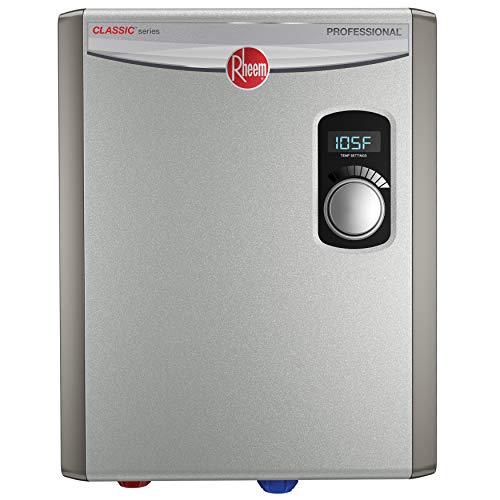
Rheem’s 18kW 240V tankless electric heater offers straightforward digital temperature control with an LED display and self-modulating power to adapt to demand. Copper immersion heating elements ensure good heat transfer and durability, while field-serviceable components support simple maintenance. The unit can supply hot water at flows up to around 4.4 GPM under typical conditions, with accurate temperature control to maintain comfort. The external control panel makes it easy to adjust temperature in real time as household needs shift, such as showers, dishwashing, or laundry.
Proper installation and electrical readiness are essential. Verify breaker size, wiring, and clearances according to local codes. This unit is designed for 240V operation and is a solid option for homes seeking reliable on-demand hot water without a storage tank. Professional guidance helps ensure safe integration with existing plumbing and electrical systems.
In considering this model, households should evaluate whether the requested flow aligns with peak demand. When multiple fixtures run simultaneously, higher-kW options may be needed to maintain desired temperatures across all taps.
ThermoMate 27kW Tankless Electric Heater

ThermoMate’s 27kW tankless electric heater is designed for higher-demand homes and busy households. It delivers on-demand hot water with a claimed flow up to approximately 5.3 GPM at a 35°F rise, making it suitable for multiple simultaneous points of use. However, it requires substantial electrical capacity: up to 114 amps, with three dedicated double-pole 40-amp breakers and may call for a 200-amp service in some installations. This makes professional engineering and panel upgrades a common consideration where space and power are available.
With self-modulating power and a compact wall-mounted design, it minimizes footprint compared with traditional tanks. Installers emphasize balancing flow, temperature rise, and electrical demand to avoid overloading the home’s service. The unit is intended for indoor installation where space savings and flexible mounting are priorities for larger homes.
In practice, customers should plan for adequate electrical service and consider concomitant loads in the residence. When properly installed, this ThermoMate model can deliver consistent hot water across several fixtures while maintaining precise temperature control at higher flow rates.
Rheem RTEX-24 24kW Tankless Electric Heater
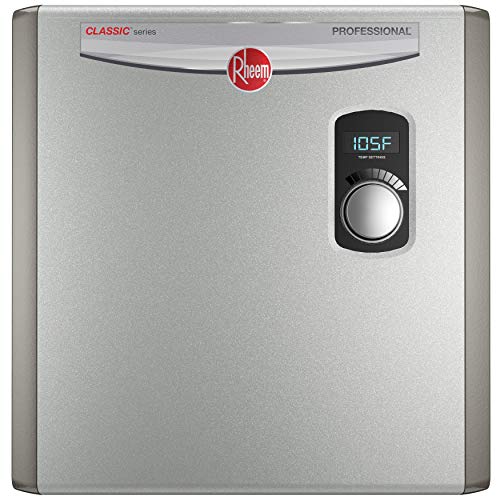
Rheem’s RTEX-24 is a high-power 24kW electric tankless heater designed for whole-home use where higher flow is needed. It features an on/off dial control paired with a digital temperature display that allows setpoints across a wide range, typically 80–140°F, with one-degree precision. Electrical requirements are substantial: three 40-amp double-pole breakers are required, and a 200-amp service is commonly recommended. Proper space in the breaker panel and adequate wiring are essential for safe, reliable operation in line with electrical codes.
Performance depends on groundwater temperature and inlet conditions, but many homes benefit from continuous hot water at multiple fixtures with careful sizing and professional installation. This model is well-suited for households with higher simultaneous demand or colder climates where adequate heat delivery is critical to maintain comfort across multiple showers and sinks.
Overall, the RTEX-24 provides robust capability for larger households and higher flow requirements, provided the electrical system and space allow for the necessary installation clearances and protection.
Buying Guide
Sizing and Flow Needs
Begin by estimating peak hot-water draw. Tankless units are sized by kilowatts and the maximum flow rate they can sustain at a given temperature rise. Colder incoming water lowers the achievable GPM, so climate matters. For modest simultaneous use, an 18 kW unit can suffice, while 24 kW and 27 kW models support higher flows. Consider the number of outlets you expect to run at once and the minimum acceptable shower temperature. Planning for future needs helps prevent undersizing.
Electrical Load and Panel Capacity
Electric tankless heaters require substantial electrical capacity. Many models need three or four-pole breakers and dedicated circuits. Check your service panel size, available spaces, and whether upgrades are feasible. The 18 kW and 24 kW units commonly require 240V circuits; higher-power units may demand 3x40A breakers and, in some homes, a larger service (around 200A). Evaluate total household electrical load to avoid overloading the service during peak use.
Installation Considerations
Placement matters. Indoor installations protect from weather but require space near existing water lines. Look for units with standard 3/4″ NPT water connections and assess mounting clearances. Water quality may affect element life; consider filtration or softened water if you have hard water. For higher-power models, professional assessment ensures panel capacity and proper wiring, reducing safety risks and code violations.
Maintenance and Longevity
Tankless heaters benefit from regular maintenance, especially in hard-water areas. Periodic descaling and inspection of heating elements help maintain efficiency and prolong life. Most units feature serviceable components, but access for flushing and part replacement is essential. Review the warranty terms to understand coverage for elements, electronics, and labor, and keep records of professional service for future claims.
Cost of Ownership and Efficiency
Electric tankless models eliminate standby heat losses and can lower energy consumption, especially when sized correctly for your home. Efficiency varies with design and usage patterns; self-modulating controls improve performance by adjusting output to demand. While initial installation costs and electrical upgrades may be significant, longer-term energy savings can offset these investments. Choose a model that aligns with your climate, water usage, and electrical readiness for optimal ownership value.
Model Comparisons at a Glance
- Rheem RTEX-13: Compact, suitable for moderate demand; easy installation; LED display
- Ranein 18kW: High efficiency; compact; good for 2-3 points of use; strong flow for size
- Rheem 18kW: Durable elements; precise temperature control; reliable for mid-range needs
- ThermoMate 27kW: High flow, best for larger households; requires substantial electrical capacity
- Rheem RTEX-24: High power, versatile for larger homes; significant electrical demands