Choosing the best polyurethane or finish for butcher blocks means balancing durability with food safety and ease of use. While true polyurethane offers a hard, durable film, several oils and conditioner blends provide food-safe protection that preserves the wood’s natural look. This guide focuses on polyurethane-related finishes and high-quality oil-based alternatives that are widely recommended for kitchen surfaces. The five products below are chosen for compatibility with butcher blocks, ease of application, and clear labeling for food-contact surfaces.
Use the summary table to compare key attributes at a glance, then dive into detailed product sections to see how each option performs in real-world kitchen settings.
| Product | Brand | Type | Key Benefit |
|---|---|---|---|
| Watco Butcher Block Oil & Finish | Watco | Oil & Finish | Non-toxic, food-safe protection; quick dry |
| Howard Butcher Block Conditioner & Oil | HOWARD | Oil & Wax Conditioner | Food-grade ingredients; prevents drying and cracking |
| Watco Butcher Block Oil + Stain, Hazelnut | Watco | Oil + Stain | Color and protection in one step; FDA compliant for food contact |
| General Finishes Butcher Block Oil | General Finishes | Oil-based Finish | Natural protection for food-contact wood surfaces |
| Howard Premium Butcher Block Conditioner | HOWARD | Beeswax/Carnauba Wax & Mineral Oil | Deep-penetrating revitalization; prevents drying and cracking |
Watco Butcher Block Oil & Finish
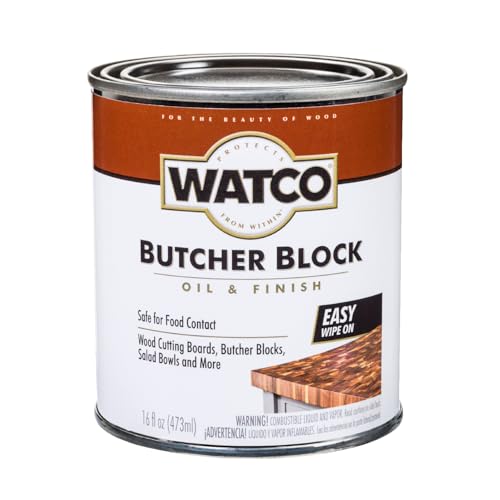
Watco’s 241758 Butcher Block Oil & Finish is designed to protect interior wood surfaces such as butcher blocks, cutting boards, salad bowls, and more. The formula is non-toxic and food-safe, making it suitable for surfaces that will contact food. It is easy to apply with no brush marks, helping achieve a smooth seal without streaks. The product dries to the touch in about two hours and covers up to 50 square feet, with a full cure ready after 72 hours. This makes it a practical, quick-refresh option for frequent kitchen use.
As an oil-and-finish blend, it offers a straightforward maintenance path for wood countertops and blocks. The oil-based formulation helps condition the wood while the finish layer provides additional protection against moisture and wear. For best results, apply thin coats, let each layer cure, and reapply as needed to maintain a smooth, food-safe surface. It’s especially suitable for homeowners seeking an easy, food-safe option without the need for complex equipment.
Howard Butcher Block Conditioner & Oil

Howard’s Butcher Block Conditioner and Oil combines food-grade mineral oil with natural waxes to provide a protective barrier for cutting boards and wooden utensils. The formula includes beeswax and cutting board wax to locking in moisture while helping seal out moisture intrusion. Designed to exceed US FDA regulations, this product helps prevent drying and cracking in hardwoods and bamboo surfaces. It is a versatile option for both home kitchens and professional settings, offering sanitary mineral oil with a waxy seal for sustained protection in between deep reseals.
The conditioning blend penetrates into the wood to rehydrate dry blocks while leaving a tasteless, odorless finish. This makes it suitable for surfaces that come into contact with food and for utensils that require regular oiling. It’s particularly useful for maintaining the longevity of wooden boards, spoons, and bowls, especially in busy kitchens where frequent use can accelerate drying and wear. Regular application can help preserve wood integrity over time.
Watco Butcher Block Oil Plus Stain, Hazelnut

Watco’s 359024 Butcher Block Oil + Stain in Hazelnut offers both color and protection in a single application. This product is specially formulated to be non-toxic and FDA compliant for food contact, providing a practical solution for surfaces that see regular use and need a consistent appearance. It dries to the touch in about two hours and fully cures in roughly 72 hours, enabling faster return to work in a busy kitchen. The Hazelnut shade adds warmth to wood grains, enhancing the natural look of butcher blocks and countertops.
As a stain plus oil product, it provides color uniformity along with sealing properties. This can simplify refinishing projects where both protective coating and color are desirable. It is especially useful for wooden countertops or blocks that show uneven color or wear, giving a durable finish that resists moisture and knife marks while maintaining a food-safe surface once fully cured.
General Finishes Butcher Block Oil

General Finishes Butcher Block Oil offers a natural protectant for all wood surfaces that come into contact with food. This oil-based finish is specifically recommended for wood cutting boards, utensils, bowls, and butcher blocks. The mineral oils used in this product meet all requirements for use on wooden products that contact food, providing a straightforward, food-safe option for daily kitchen use. It’s a reliable choice for maintaining moisture in wood without introducing heavy resin or film-forming components.
The oil focuses on nourishment and protection rather than building a thick film. It’s well suited for ongoing maintenance and quick resealing between deeper refinishing projects. Home cooks and professionals alike can benefit from its simple application and compliance with food-safety standards, especially on surfaces that are repeatedly exposed to moisture, oils, and knife use.
Howard Premium Butcher Block Conditioner

Howard Premium Butcher Block Conditioner is a deep-penetrating blend designed to revitalize hardwoods and bamboo. It combines genuine beeswax, Brazilian carnauba wax, and USP food-grade mineral oil that is tasteless and odorless and will never go rancid. This conditioner is ideal for conditioning and maintaining wooden bowls, spoons, and other utensils, as well as butcher blocks. The penetrating mineral oil works with the waxes to improve water resistance and help repair knife marks, keeping wood surfaces in better condition between more intensive restorations.
Sold in a 1-gallon size, this option is geared toward higher-usage environments, including restaurants or busy households. The mixture provides long-lasting protection and a healthier wood surface by reducing moisture loss while preserving natural wood aesthetics. Regular conditioning may extend the lifespan of cutting boards and related utensils, reducing the risk of cracks and warping over time.
Buying Guide
Key purchase considerations help determine the best option for a given kitchen and usage pattern. The products above are primarily oil-based finishes and conditioner blends rather than true oil-based or water-based polyurethane films. When your priority is a hard, durable film, look for true polyurethane formulations specifically labeled for foodsafe surfaces and with explicit curing times. If you prefer natural wood appearance and easy maintenance, oil finishes and wax blends can be simpler to apply and renew.
- Food safety and FDA compliance: Ensure the product is labeled for food-contact surfaces and meets regulatory standards. Oil-and-wax blends tend to be food-safe when properly cured, while some stains may also claim food-contact approval after curing.
- Drying and curing times: Dry to the touch in a few hours; full cure may take several days. Plan usage around these timelines to avoid residue or odors on freshly treated surfaces.
- Finish type and appearance: Oil-based finishes nourish wood and can deepen color. Stains add color while sealing. Polyurethane films offer durable protection but may affect the natural look or odor until fully cured.
- Maintenance and reapplication: Oils and wax blends typically require more frequent maintenance. Film-forming finishes may require sanding and reapplication less often but can be harder to renew if damaged.
- Application method: Some products rinse, wipe, or brush on; others require simple oil application and wipe-off. Choose based on convenience, ventilation, and kitchen use patterns.
- Block size and usage: For household kitchens with frequent prep, a durable, easy-to-reapply option is practical. For culinary environments with heavy use, consider a product designed for higher wear resistance and faster refresh cycles.
- Color and appearance: If you want to adjust the look, stains combined with oil (as in Hazelnut) provide color with protection, whereas clear oils preserve the natural grain. Decide based on desired aesthetic and wood color.
In summary, the best choice depends on whether you want a simple, food-safe maintenance routine (oil and wax conditioners) or a more protective, film-based approach (polyurethane finishes) tailored for butcher blocks. The selected products cover a spectrum of maintenance philosophies—from quick-refresh oils to color-enhancing stains and deep-conditioning wax blends—so you can balance ease of use with long-term durability in a busy kitchen. Always follow manufacturer directions and cure times for optimal, food-safe results.