Outdoor gas tankless water heaters deliver endless hot water on demand while saving space and energy. This guide highlights five reliable models that fit typical American homes, with quick-reference details and balanced considerations so you can compare efficiently. Each option below is designed for outdoor use or versatile installation, helping you choose the right balance of flow, efficiency, and durability for your climate and family size.
Summary table below provides a snapshot of key specs. It is followed by individual product sections with deeper detail, so you can evaluate how each unit might perform in your setting.
| Product | Brand | Max GPM | Fuel | Install Type | Notable Feature |
|---|---|---|---|---|---|
| Rheem RTG-70XLN-3 | Rheem | 7.0 | Natural Gas | Outdoor | High efficiency; water-saving setting |
| Rinnai V53DeN | Rinnai | 5.3 | Natural Gas | Outdoor | 10-year heat exchanger warranty |
| Rinnai RX199iN | Rinnai | 11.1 | Propane or Natural Gas | Indoor or Outdoor | Condensing, high efficiency, WiFi-ready |
| FOGATTI 180S | FOGATTI | 8.1 | Natural Gas | Outdoor | Precise temperature control, remote panel |
| Orbek Outdoor 120K | Orbek | 5.1 | Natural Gas | Outdoor | Wind and weather resistant, CSA certified |
Rheem RTG-70XLN-3 Outdoor Tankless Heater

The Rheem RTG-70XLN-3 is a compact, outdoor, non-condensing natural gas tankless heater delivering about 7.0 GPM, suitable for typical households looking to replace a conventional tank. Its design focuses on on-demand hot water, avoiding standby losses common to tank systems. The unit emphasizes energy efficiency by only firing when hot water is demanded, which helps control monthly energy costs. A notable feature is a Water Saving setting that can reduce water waste by up to 1,100 gallons annually, aligning with eco-friendly and high-usage households. Proper installation must account for outdoor exposure and venting needs.
With multiple applications such as showers, dishwashing, and laundry simultaneously in some configurations, this Rheem model can support several fixtures without noticeable temperature drops. It is well-suited for mid-sized homes, vacation properties, and add-on spaces like outdoor kitchens where space savings and reliability are priorities. Maintenance needs are moderate, focusing on regular flushing and vent inspection to sustain performance.
Rinnai V53DeN Outdoor Tankless Water Heater
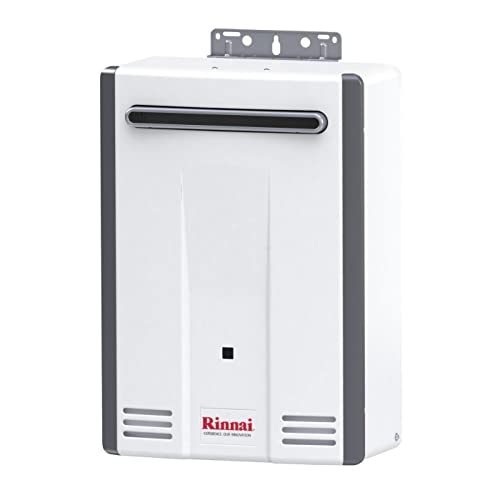
The Rinnai V53DeN offers 5.3 GPM of continuous hot water through a compact, outdoor-ready design. This model emphasizes reliability for families seeking steady hot water across multiple fixtures—up to four appliances simultaneously—without the clutter of a large tank. Energy efficiency is a core focus, heating water only when needed to reduce utility consumption over time. A standout warranty feature is a 10-year coverage on the heat exchanger, providing longer-term protection against common wear. Its outdoor installation footprint makes it a practical choice for patios, garages, or outdoor utility closets.
Users will appreciate its balance between flow and efficiency for typical homes. Installation considerations include proper venting and clearances for outdoor exposure and weather. The V53DeN pairs well with existing gas lines and offers straightforward operation, with dependable performance when demand fluctuates across morning routines and evening activities.
Rinnai RX199iN Condensing Tankless Heater

The RX199iN represents a high-capacity, condensing system with up to 11.1 GPM and 199,000 BTU. It is designed for flexible installation, suitable for indoor or outdoor use thanks to Versa Vent and Smart Sense control that supports propane or natural gas. The unit is engineered for efficiency, delivering a UEF rating of .98 and precision control through a modern interface. A Quick Flush feature simplifies maintenance, and a Controlr module enables optional WiFi control. This model targets larger households with diverse hot water needs across kitchens, baths, and laundry areas, while maintaining compact dimensions comparable to smaller outdoor units.
Install considerations include venting compatibility (outdoor options may require an outdoor-cap vent cap), electrical supply for controls, and potential insulation needs in colder climates. While the RX199iN is feature-rich, it requires careful sizing to avoid oversizing for smaller homes, and planning for future hot water demand is recommended to maximize return on investment over time.
FOGATTI 180S Outdoor Tankless Water Heater
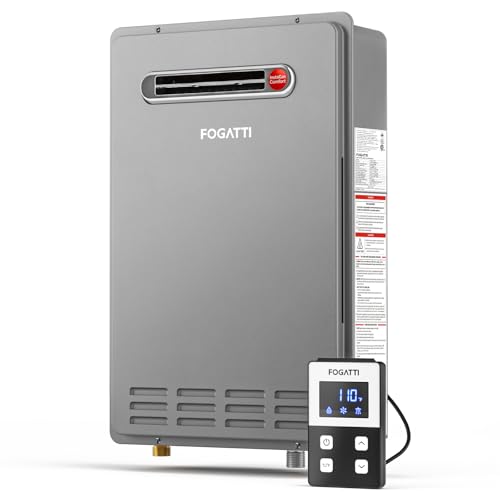
FOGATTI’s 180S outdoor unit delivers up to 8.1 GPM with an input rating of 180,000 BTU, designed for immediate on-demand hot water and reliable performance across 3-5 outlets. The model emphasizes outdoor durability with a remote control panel for indoor operation, and a bottom-mounted fan that supports stable combustion and safety by reducing smoke backflow in varying wind conditions. Four-stage combustion and precision temperature controls enable consistent water temperatures, minimizing the risk of sudden changes when multiple fixtures are used. This unit suits households that demand strong performance in outdoor setups with robust climate tolerance.
Key considerations include ensuring the installation location provides adequate clearance for venting and service access, plus regular flushing to maintain efficiency. If you frequently run multiple hot water outlets simultaneously, this model offers a solid balance of flow, control, and exterior robustness for long-term outdoor use.
Velpax Outdoor Natural Gas Tankless Heater

This Velpax model delivers 5.26 GPM at up to 120,000 BTU, designed for outdoor use with a stainless body and LED digital display for precise temperature adjustments from 95°F to 149°F. The unit offers efficient, on-demand hot water suitable for 3-4 fixtures, making it a practical option for whole-house operation. It emphasizes energy savings through regulated gas input and advanced combustion, resulting in quieter operation and reduced energy waste. Aesthetics and build quality contribute to durability in outdoor environments and long-term reliability.
In choosing Velpax, consider the climate and wind exposure, as well as the need for proper venting and weatherproofing. The digital display facilitates quick temperature adjustments, and the model’s performance can be optimized with routine maintenance and periodic descaling if mineral content is high in your water supply.
Orbek Outdoor Tankless Water Heater 120K BTU

The Orbek outdoor tankless water heater provides up to 5.1 GPM and 120,000 BTU, serving 2-4 fixtures with consistent hot water. Built for outdoor use, it withstands strong winds (wind resistance up to force 9) and features IPX4 waterproof protection, enabling operation in varied weather conditions. CSA certified, this model emphasizes safety with protections like dry combustion, overheat, anti-freeze, water leakage prevention, flame failure protection, and high water pressure safeguards. It is a straightforward choice for weather-exposed installations where robust protection and reliable performance are a priority.
Installation considerations include ensuring proper outdoor venting and adequate clearance for service access. For households with extreme weather or high outdoor exposure, Orbek’s weatherized design and safety features help maintain consistent hot water while mitigating common outdoor installation challenges.
Buying Guide
Key Purchase Considerations
- Flow needs: Match GPM to your household demand. Large families or homes with simultaneous showers, dishwashing, and laundry may require 9–12+ GPM from a single unit, favoring higher-capacity models like the RX199iN.
- Fuel type and availability: Natural gas is common, but propane-compatible models offer flexibility in areas without natural gas lines. Ensure the chosen unit supports your fuel source.
- Outdoor durability: For outdoor installations, look for weatherized housings, wind resistance, and IP ratings. Condensing units tend to be more efficient but may require more venting considerations.
- Vent and venting requirements: Outdoor units often need appropriate venting, and indoor/outdoor models may have Versa Vent or similar systems. Plan for the correct vent type and clearance.
- Energy efficiency and cost of operation: Condensing units typically deliver higher efficiency (UEF ratings) than non-condensing models, which can translate to lower energy costs over time.
- Warranty and service: A longer warranty on critical components (such as heat exchangers) provides greater peace of mind and aligns with the long service life expected from these units.
- Ease of maintenance: Features like Quick Flush, accessible ports, and user-friendly interfaces simplify routine maintenance and prolong unit life.
- Electrical and installation costs: Some models require dedicated electrical supply for controls or higher gas line capacity. Budget for professional installation and any required upgrades.
Condensing vs Non-Condensing Trade-Offs
- Condensing units (like the RX199iN) are more energy efficient, extracting more heat from exhaust and typically offering higher GPM capabilities. They may demand more precise venting and a higher upfront cost.
- Non-condensing units (like the Rheem RTG-70XLN-3 and FOGATTI 180S) are often simpler to install and may have lower upfront costs, but they can be less efficient and have limited long-term energy savings compared to condensing models.
- Consider your climate and venting options: in colder regions, condensing models may provide better consistent performance with advanced controls, while non-condensing units can be perfectly adequate for moderate climates and smaller households.
Sizing for Real-World Use
- Estimate peak demand: Identify how many fixtures may run simultaneously. A 5–7 GPM unit suits smaller homes; 8–11 GPM fits most mid-sized homes; 11+ GPM is ideal for large households or luxury setups with multiple simultaneous outlets.
- Factor climate and inlet water temperature: Warmer inlet water reduces required BTU input. Cold climates may need higher BTU to maintain target temperatures, especially on higher GPM settings.
- Plan for future needs: If you anticipate additional bathrooms, spa-like features, or increased occupancy, select a unit with headroom beyond current demand to avoid undersizing.
Installation and Maintenance Perspective
- Professional installation is recommended: proper gas supply sizing, venting, and clearance are critical for safe, efficient operation.
- Maintenance schedule matters: periodic flushing, vent inspection, and safety checks reduce mineral buildup, corrosion risk, and combustion inefficiency.
- Outdoor reliability: choose units with weather-resistant housings and protection features if exposed to sun, rain, and wind. CSA or UL certifications indicate compliance with safety standards.
In summary, the best choice depends on your household size, climate, and installation constraints. For high-demand homes with outdoor-ready setups, models like the RX199iN offer abundant hot water with advanced efficiency, while mid-range flows from the V53DeN or Rheem options deliver solid performance with straightforward installation. For outdoor durability and specific weather resistance, FOGATTI and Orbek provide robust designs designed to withstand environmental exposure. Always verify venting requirements, ensure adequate gas supply, and plan for long-term maintenance to maximize your investment.