Choosing the right kadai can elevate Indian cooking, from quick tadka to slow-simmered curries. Kadhais come in cast iron, tri-ply stainless steel, and nonstick options, each with distinct heat retention, durability, and maintenance needs. This guide highlights five highly regarded kadhais that fit American kitchens, ranging from traditional seasoned cast iron to modern stainless-clad designs. Use this overview to match your stove, meals, and care routine with the best option for you.
| Product | Brand | Material / Size | Notable Feature |
|---|---|---|---|
| Tramontina Utsava Cast Iron Kadai (4.9 Qt) | Tramontina | Cast Iron, 4.9-Quart | Large-capacity with pre-seasoned surface |
| Hawkins 2.5 L Triply Kadai (SSD25G) | HAWKINS | Tri-Ply Stainless Steel, 2.5 L | Glass lid and induction-ready |
| Vinod Platinum Triply Kadai (22 cm) | Vinod | Tri-Ply Stainless Steel, 22 cm diameter | Induction-friendly, steam lid option |
| Hawkins Futura Nonstick Kadhai (2.5 L) | HAWKINS | Nonstick on hard anodised aluminium, 2.5 L | Low-oil cooking and easy release |
| Made In 10″ Stainless Kadai Pan | Made In | 5-Ply Stainless Clad, 10″ diameter | Professional-grade, induction compatible |
Tramontina Utsava Cast Iron Kadai

- 4.9-Quart Kadai – Large capacity for entertaining; ideal for family meals and festive dishes.
- Heavy-Duty Cast Iron construction delivers superior heat retention and even cooking.
- Pre-seasoned smooth interior with natural oil for easy food release and better performance over time.
This cast iron kadai is well-suited when you need steady heat for deep curries, sautes, and large batches, while offering long-lasting durability.
Hawkins 2.5 L Triply Stainless Kadai

- Tri-Ply stainless steel construction combines longevity with reduced sticking and burning.
- Includes a glass lid for steam control and visibility during cooking.
- Induction compatible with rust-proof, food-grade stainless steel layers.
Ideal for quick sautéing, shallow frying, and even heating across a medium batch, with the convenience of a see-through lid.
Vinod Platinum Triply Kadai
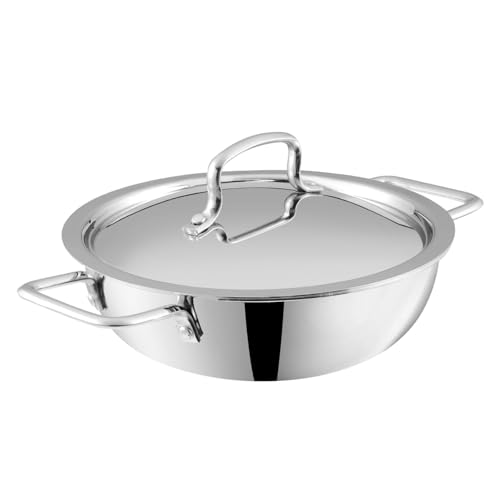
- Three-layer tri-ply stainless steel for healthy cooking and even heat distribution.
- Inner 18/8 stainless steel surface is food-grade and induction-friendly; aluminum layer enhances heat spread.
- Includes a stainless steel lid with steam vent and heat-resistant handle for safe handling.
Best for bulk cooking and simmering sauces, with durable construction designed for frequent use on induction and other heat sources.
Hawkins Futura Nonstick Kadhai
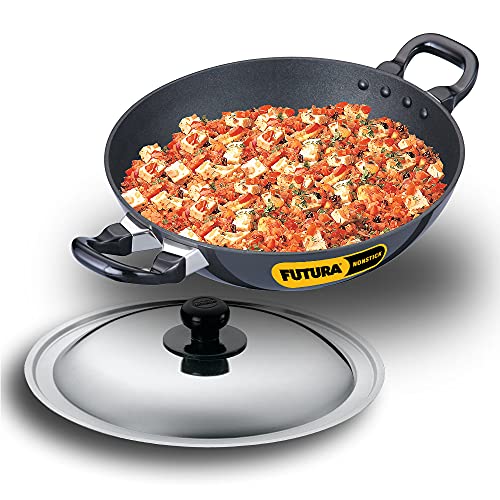
- PFOA-free nonstick coating on hard anodised aluminium for easy food release.
- Low oil requirement makes sauting and frying lighter and healthier.
- Robust, riveted plastic handles designed for comfort and safety during handling.
Perfect for everyday cooking with minimal oil, quick cleanup, and versatile use for gravies and curries.
Made In 10″ Stainless Kadai Pan

- 5-ply stainless clad with a wide bowl and sloping sides for even, fast heating.
- Professional-grade cookware designed for consistent performance across dishes.
- Induction compatible; durable construction resists warping and maintains shape.
Suitable for sautéing, stir-frying, and shallow to deep-frying, with a wide, easy-to-handle surface for busy kitchens.
Buying Guide
Material And Construction
Cast iron excels at heat retention and develops seasoning for natural nonstick. Tri-ply stainless (five-layer or more) offers fast, even heating and effortless cleaning, with wide induction compatibility. Nonstick options reduce oil usage but may require gentler care and restrictions on high heat. Choose based on how you cook most often — slow-simmered curries, high-heat stir-fries, or versatile family meals.
Induction Compatibility
Induction readiness is essential in modern kitchens. All-stainless tri-ply and many premium clad pans are induction-friendly. Cast iron also works on induction but is heavier. Confirm your cookware is labeled induction compatible if you have an induction stove to ensure efficient heating and energy use.
Capacity And Size
Consider batch size and recipe type. For feeding a family or entertaining guests, a larger kadai (2.5–4.9 Qt) offers flexibility for curries and gravies. For daily use or smaller households, 2–3 Qt options work well. Deep designs help with sauces and soups, while wide bowls are ideal for sautéing and stir-frying.
Maintenance And Care
Cast iron requires regular seasoning and careful cleaning to prevent rust, but develops a natural nonstick with use. Stainless clad and hard-anodized aluminum pans are easier to clean and typically dishwasher-safe (check manufacturer guidance). Nonstick interiors demand gentle utensils and lower heat to prolong coating life. Match care routines with your cooking style and cleaning preferences.
Lid And Venting
Lids help control moisture and heat. Glass lids allow monitoring without lifting, which is convenient for simmering sauces. Some lids include steam vents to manage pressure and prevent spills. If you frequently cover dishes, a kadai with a lid is a practical choice.
Durability And Long-Term Value
Heavy, multi-ply stainless options tend to last longer with frequent use and higher heat. Cast iron offers unmatched durability and heat retention but requires seasoning and maintenance. Nonstick pans provide convenience but may have a shorter lifespan under heavy use. Weigh durability against your cooking frequency and willingness to maintain the cookware.
Practical Comparisons
- Cast iron vs stainless clad: Cast iron delivers superior heat retention and seasoning potential; stainless clad heats quickly and cleans easily.
- Nonstick vs bare metal: Nonstick reduces oil and cleanup but may require gentler heat and care; bare metal excels with high-heat methods and robust cookware.
- Size choice: For large gatherings, prioritize larger volumes; for daily meals, a compact 2–3 Qt is more maneuverable.