Choosing the right Japanese carbon steel blades can transform prep work into precise, enjoyable cooking. This guide reviews five top picks known for edge retention, toughness, and comfortable handling. From Damascus-patterned sets to individual Gyuto and Nakiri knives, these tools fit both home kitchens and professional spaces. Each product section provides a concise overview, followed by a practical buying guide to help you compare steel types, tempering, and maintenance.
| Product | Brand | Core / Steel | Key Feature |
|---|---|---|---|
| SHAN ZU Damascus Knife Set, 3 PCS | SHAN ZU | 10Cr15Mov Damascus Japanese steel; 67-layer layered steel | Real Damascus pattern, high hardness, long-lasting |
| SHAN ZU Chef Knife 8 Inch Damascus | SHAN ZU | 10Cr15Mov Damascus Japanese steel; 67-layer | Ultra-sharp, durable multi-layer blade |
| MITSUMOTO SAKARI Gyuto 8 Inch | MITSUMOTO SAKARI | 3-Layer 9CR18MOV high carbon steel | Hand-forged, water ripple pattern, rosewood handle |
| HOSHANHO 7-Piece Kitchen Knife Set | HOSHANHO | 10Cr15CoMoV high-carbon stainless steel | Magnetic block, broad knife selection, ergonomic grip |
| HOSHANHO 7-Inch Nakiri Knife | HOSHANHO | 10Cr15CoMoV high-carbon stainless steel | Ultra-sharp, 60 HRC, pakkawood handle |
SHAN ZU Damascus 3-Piece Knife Set

The SHAN ZU 3-Piece Damascus knife set features a real Damascus blade constructed from 10Cr15Mov Japanese steel with a hardness near 62 HRC. The blade is formed through multiple heat-treat cycles and folding, delivering a 67-layer laminated pattern that deepens with polishing. This construction emphasizes wear resistance and rust prevention for long-term use. The blades are designed for sharpness and precision, while the included knives provide a versatile trio for slicing, dicing, and chopping. An ergonomic G10 handle offers solid balance and control in everyday kitchen tasks.
SHAN ZU Chef Knife 8 Inch Damascus
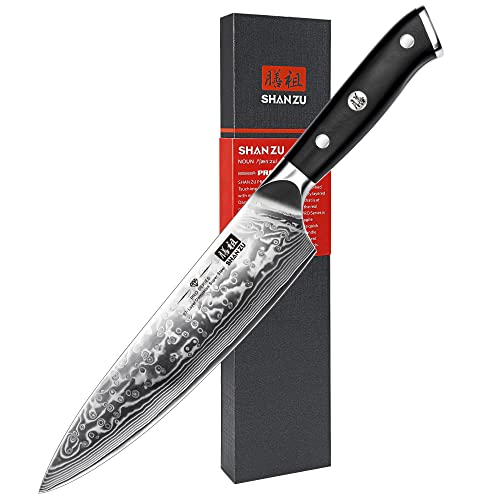
The SHAN ZU 8-inch Damascus chef knife uses a core of 10Cr15Mov Damascus Japanese steel with approximately 67 layers, delivering exceptional edge retention and durability. The blade pattern results from folding carbon steel multiple times, producing a vivid Damascus look that stays sharp through heavy kitchen use. While engineered for everyday tasks—from mincing herbs to slicing proteins—the knife remains lightweight and well-balanced, featuring an ergonomic handle designed for comfortable, extended use.
MITSUMOTO SAKARI Gyuto Knife 8 Inch

The MITSUMOTO SAKARI Gyuto 8-inch blade blends traditional hand-forging with modern materials. It uses three layers of 9CR18MOV high-carbon steel, producing a responsive, ultra-sharp edge. A distinctive water-ripple forging pattern adds character while contributing to a balanced weight distribution. The rosewood octagonal handle provides a comfortable grip and a secure feel during precise cuts, allowing chefs to glide through proteins and produce with minimal effort and maximum control.
HOSHANHO 7-Piece Kitchen Knife Set

This 7-piece HOSHANHO set covers a broad range of kitchen tasks with a magnetic block for easy storage. Made from 10Cr15CoMoV high-carbon stainless steel and vacuum heat treatment, the blades achieve up to 60 HRC hardness for edge retention and durability. The lineup includes essential knives (chef, santoku, nakiri, utility, paring) along with a sturdy block, all designed to deliver consistent performance while maintaining a balanced, comfortable grip for everyday prep.
HOSHANHO 7-Inch Nakiri Knife

The HOSHANHO 7-Inch Nakiri combines a precision-ground, ultra-sharp 15-degree edge with 60 HRC hardness. Crafted from 10Cr15CoMoV high-carbon stainless steel, this knife excels at clean, precise vegetable and fruit cuts. The pakkawood handle is designed to fit the natural grip and reduce fatigue during extended prep work, making it a reliable addition for cooks who value straight, thin-sliced results and comfort in the kitchen.
Buying Guide
- Blade steel and layering: Real Damascus blades (67-layer laminates) offer distinct patterns and strong edge retention, but entry-level options may use multiple-layer laminates or high-carbon stainless steel. Decide whether you prefer a visibly patterned blade or a straightforward high-carbon stainless option.
- Hardness and edge retention: Look for hardness ratings around 60–62 HRC for durable, sharp edges. Higher hardness improves edge retention but can require more careful sharpening and handling to avoid chipping.
- Damascus authenticity: Authentic multi-layer Damascus patterns result from repeated folding and forging. Some products advertise Damascus patterns that are laser-etched; real Damascus is generally more durable and visually pronounced over time.
- Handle material and balance: G10 and pakkawood offer different feels and grip textures. Consider ergonomics, weight distribution, and whether the knife feels balanced in your hand for long prep sessions.
- Set vs. single knife: Sets provide variety (chef, Nakiri, utility), while single knives let you optimize a specific task. For novices, a balanced set helps cover common kitchen tasks without constantly swapping blades.
- Sharpening and maintenance: Japanese carbon steel benefits from regular maintenance, hand washing, and thorough drying. Some blades are easier to sharpen than others; consider your sharpening routine and access to appropriate stones or sharpeners.
- Maintenance environment: Carbon-steel blades require drying after use to prevent corrosion, whereas some stainless variants resist staining but may lack the same edge-holding characteristics as carbon steel.
- Storage and safety: Magnetic blocks, knife rolls, and recessed sheaths help protect blades and keep them accessible. Proper storage minimizes dulling and accidents in busy kitchens.
- Brand reliability and warranty: Reputable brands with documented forging processes and warranties offer greater assurance of consistent performance and support.