Hard water can cause mineral buildup, shorten appliance life, and leave dishes and skin feeling less than ideal. This guide highlights five top household water treatment options that balance hardness removal, efficiency, and space needs for American homes. From high-capacity, metered systems to salt-based solutions and even compatible salt products, these picks cover common water conditions and household sizes. Use this overview to compare features, installation considerations, and long-term maintenance before choosing the right system for your home.
| Product | Brand | Capacity (Grains) | Type | Notable Feature |
|---|---|---|---|---|
| iSpring WCS45KG Whole House Softener | iSpring | 45,000 | Salt-based | Backwash feature; SGS-tested hardness removal up to 99.43% |
| A. O. Smith Descaler | AO Smith | N/A | Salt-free descaler | Chemical-free scale prevention; no water softening |
| Aquasure Harmony 30,000 | Aquasure | 30,000 | Salt-based | Pre-filtering and digital metered control |
| Kenmore 350 | Kenmore | 32,000 | Salt-based | IntelliSoft technology; compact, space-saving design |
| EcoPure EP42 | EcoPure | 42,000 | Salt-based | Autosense regeneration; NSF certified |
iSpring WCS45KG Whole House Softener
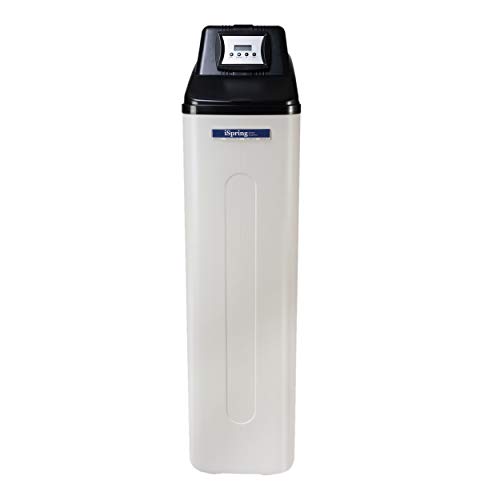
The iSpring WCS45KG is designed for higher-capacity water softening with a 45,000-grain rating, making it suitable for larger homes or light commercial use. The system is SGS-tested to remove up to 99.43% of hardness, addressing calcium and magnesium at the point of entry. Its one-tank compact design helps conserve space, a critical factor in basements or utility rooms with limited footprint. The backwash feature supports thorough resin cleaning and system longevity, reducing maintenance frequency while maintaining consistently soft water for cooking, bathing, and laundry.
Key advantages include a high-capacity resin bed that supports steady flow during peak usage and a design that minimizes space requirements. The WCS45KG is ideal where hard water affects multiple fixtures and appliances, including water heaters and boilers. Prospective buyers should consider installation compatibility with existing plumbing and the cost of salt consumption over time, as well as routine filter changes if pre-filters are included in the setup. This model targets households and small businesses seeking dependable, continuous soft water with strong hardness removal performance.
A. O. Smith Descaler

The AO Smith Descaler offers a salt-free approach to reducing scale buildup without softening water. This solution is well-suited for households with moderate hardness, typically under 15 grains per gallon, and is designed to be maintenance-light with no backwashing or salt bags. While it does not soften water or remove minerals that cause hardness, it can help minimize scale accumulation in pipes and fixtures, which can improve flow and reduce cleaning needs. It is a practical alternative for households seeking chemical-free scale prevention without ongoing salt or electricity use.
Consider this option when you want to avoid salt-based regeneration entirely. It does not reduce total dissolved solids (TDS) or iron content, and it will not soften water for dishware or laundry. For larger families or homes with higher mineral content, a traditional salt-based system may deliver more noticeable hardness reduction, while the AO Smith Descaler provides a low-maintenance, additive-free approach to scale prevention.
Aquasure Harmony 30,000

The Aquasure Harmony Series provides a 30,000-grain capacity with a high-performance automatic digital metered control head. Designed for homes with 1–2 bathrooms, it reduces hardness effectively while managing salt and water use through metered regeneration, which conserves resources as water usage changes. A triple-purpose pre-filter (sediment, carbon, and zinc) targets chlorine, VOCs, odors, and other contaminants to improve overall water quality before it reaches taps and appliances. This combination helps extend appliance life and reduces skin and hair irritation associated with hard water.
Users benefit from improved efficiency, as the meter-regulated system regenerates only when necessary, potentially lowering salt and water consumption compared with timer-based systems. Space considerations are favorable, with a compact footprint suitable for many utility rooms. As with any salt-based option, ongoing salt replenishment and occasional maintenance are required. Assess household water hardness, flow requirements, and local water usage patterns to confirm compatibility with the Harmony model.
Kenmore 350 Whole House Softener

The Kenmore 350 features 32,000 grains of capacity with IntelliSoft technology that adapts to household water needs, helping to optimize salt and water use while delivering consistent soft water. Its compact, space-saving design makes installation feasible in tighter spaces, a common constraint in homes with limited utility room. The system is geared toward preventing scale buildup in appliances and plumbing, which can contribute to longer lifespans for water heaters, dishwashers, and washing machines. Its streamlined operation is designed for straightforward maintenance and reliable performance over time.
When considering the Kenmore 350, evaluate your household size, peak water demand, and the typical hardness level in your water. While it provides solid capacity for many families, larger homes or higher calcium and magnesium levels may require a higher-capacity model. Installation complexity and warranty terms are additional factors to review before purchasing.
Water Softener Salt Pack

This 3-bag pack of water softener salt is designed to support salt-based systems by providing the regenerant needed to keep softening cycles running smoothly. Regular salt replenishment is essential for maintaining resin efficiency and consistent hardness removal. The packs offer a convenient, bulk supply that can reduce the frequency of shopping trips and ensure your system maintains optimal performance between regenerations. For best results, follow your softener’s regeneration schedule and local water hardness guidelines when calculating how much salt to use.
Note that this product is compatible with most salt-based water softeners, but it is not a stand-alone water softener. It complements effective resin-based systems by ensuring adequate salt availability for effective ion exchange. Always verify compatibility with your specific model and consult installation instructions before stocking up on salt. Salt management is a key factor in long-term operating costs and appliance protection.
Buying Guide: Key Purchase Considerations And Comparisons
Choosing a household water softener involves balancing capacity, efficiency, and household needs. Consider the following perspectives to make an informed choice:
- Grain capacity versus household size: Higher-capacity units (e.g., 45,000 grains) are better for larger families or homes with high water usage, while 20,000–30,000 grain models suit smaller households. Capacity should align with local water hardness and daily water consumption to prevent premature regeneration.
- Salt-based versus salt-free approaches: Salt-based systems remove minerals via ion exchange, delivering truly softened water but requiring ongoing salt refills and periodic resin maintenance. Salt-free descalers reduce scale without softening water and may be appealing for chemical-free or low-maintenance preferences, albeit with limited hardness reduction.
- Control technology: Metered or digital control heads optimize regeneration based on actual usage, saving salt and water. Timer-based systems regenerate at set intervals and may waste more resources in low-usage periods. Metered controls are generally more efficient for variable water demand.
- Space and installation: Compact, single-tank designs save space in tight utility rooms. Ensure the unit’s inlet/outlet sizes, plumbing configuration, and electrical requirements fit your home’s layout. Professional installation may be prudent for optimal performance and warranty compliance.
- Pre-filtration and water quality: Pre-filters for sediment and chlorine can improve taste, odor, and overall water quality before it reaches the softening resin. For wells or high-iron water, additional filtration considerations can enhance outcome and filter longevity.
- Maintenance and operating costs: Ongoing salt consumption, resin cleaning, and occasional media replacement influence total cost of ownership. Compare salt efficiency, regeneration frequency, and available service plans when evaluating long-term value.
- Descaler options and iron handling: If your water contains elevated iron or tannins, some systems pair with iron removal or pre-filtration to avoid fouling resin beds and to maintain system efficiency over time. For extremely hard water, consider a higher-capacity system with robust regeneration cycles.
- Warranty and support: Look for warranties covering resin, valve heads, and labor. A solid warranty and accessible customer support can reduce maintenance headaches and ensure reliable performance.
In practice, the right choice depends on your specific water hardness, family size, and budget. For households facing strong mineral content and higher daily usage, a 30,000–45,000 grain salt-based system with metered regeneration offers strong performance. If you prefer a low-maintenance approach and have moderate hardness, a salt-free option or a salt-salt combination with a well-planned salt supply can be suitable. Always verify product compatibility with your plumbing, and consider a water test to guide your decision.