A safe, efficient dryer vent pipe improves home comfort and indoor air quality. The right vent solution reduces heat buildup, lint accumulation, and the risk of fires, while fitting into tight laundry areas. This guide highlights five high-performing options suited for American homes, focusing on durability, heat resistance, easy installation, and compatibility with common vent configurations.
A quick reference table follows for a snapshot of each product, then detailed notes for installation and usage.
| Product | Brand | Length / Size | Notable Feature |
|---|---|---|---|
| Steelsoft Heavy Duty 4-Inch Vent Hose | Steelsoft | 3 ft | Puncture resistant, 215°F heat rating, 6-ply foil duct |
| TEAIERXY 4 Inch Dryer Vent Hose 8 ft | TEAIERXY | 8 ft | Six-layer design, 360° stretch, two clamps included |
| Hon&Guan 4-Inch Semi Rigid Dryer Vent Hose | Hon&Guan | 8 ft | Fireproof Class 0, easy 90-degree bends, durable |
| Matework 4-Inch 8-Foot Dryer Vent Hose | Matework | 8 ft | Rubber seal connectors, six-layer aluminum duct, compatible with standard vents |
| DUNDAS JAFINE P4E20ZW 4-Inch 24-Inch Vent Pipe | Dundas Jafine | 24 in | Snap LOCK aluminum, heavy gauge construction |
Steelsoft Heavy Duty 4-Inch Vent Hose

Steelsoft’s Heavy Duty 4-Inch Vent Hose is designed for tight spaces where standard hoses struggle. Its compact 3-foot length maintains a practical balance between maneuverability and airflow, making it suitable for laundry closets and short vent runs. The hose uses a thick, multi-ply construction intended to withstand daily wear and punctures in confined installations.
The hose wall is built to endure high temperatures, rated up to 215°F, and it offers improved heat aging resistance relative to PVC ducting commonly restricted by code in many areas. The design features a narrower wire helix and a foil accordion that preserves a larger interior diameter, aiding faster exhaust and reducing turbulence. The package includes two clamps to secure connections and minimize leaks and vibrations in high-use laundry spaces.
Overall, this option suits homeowners seeking durability in tight installations where conventional, thinner hoses may fail. Proper assembly—ensuring clean connections and avoiding sharp bends—helps maximize airflow and safety in the dryer exhaust path.
TEAIERXY 4 Inch Dryer Vent Hose 8 Ft
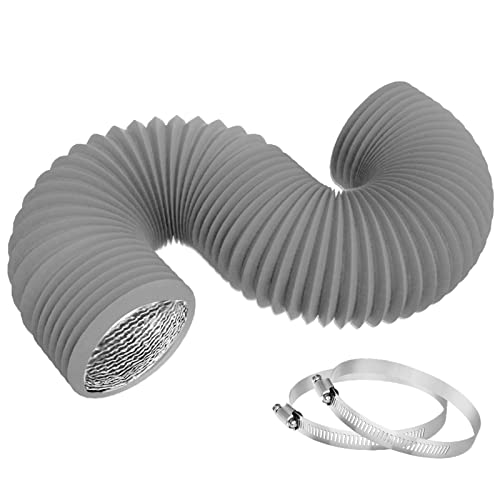
TEAIERXY’s 4-Inch Dryer Vent Hose extends eight feet, offering a flexible solution for longer runs or awkward layouts. The hose employs a six-layer construction (2 Aluminum Foil, 2 PET, Steel wire, and PVC), which contributes to durability, insulation, and noise reduction. The steel wire layer helps maintain shape while resisting deformation during handling and installation.
Key design features include 360° stretch without permanent deformation and shrinkage that allows the run to be lengthened beyond the actual installation length. The kit includes two clamps for secure mounting, and the hose can be cut to the required length to fit a variety of configurations. This option pairs flexibility with robust layering for reliable performance in constrained spaces.
In applications where light leakage and heat transfer are concerns, the PVC layer adds light-blocking properties and insulation benefits, helping minimize energy loss around the vent path.
Hon&Guan 4-Inch Semi Rigid Dryer Vent Hose

Hon&Guan’s 4-Inch Semi Rigid Dryer Vent Hose is eight feet long and built from premium aluminum foil with semi-rigid properties. This design supports safer operation in tight spaces and reduces the risk of kinks that can impede airflow. The included clamps and accessible installation materials simplify mounting in limited spaces.
Safety is a primary focus: the hose is fireproof and rated Class 0 for fire resistance, helping reduce the risk of flame or smoke spread along the vent path. It operates effectively across a wide temperature range from -22°F to 482°F, making it suitable for dryer exhausts near heated spaces. The product emphasizes easy installation in angular or narrow runs while maintaining robust durability.
Matework 4-Inch 8-Foot Dryer Vent Hose

Matework’s 4-Inch, 8-Foot Dryer Vent Hose delivers a robust eight-foot run with a secure 4-inch diameter ideal for longer distances. The hose uses a six-layer aluminum duct construction that includes two PET layers, steel wire, and a PVC coating, offering tear resistance and shape retention in tight spaces. A practical rubber seal at both ends improves sealing performance and minimizes air leaks when paired with clamps.
The kit includes clamps for secure mounting, and the ducting is designed to fit vents within a tight tolerance range of 3.95 to 4.15 inches, which covers most standard 4-inch vent fittings. This combination of durable layering and effective sealing makes it a versatile choice for mixed layout configurations, especially where space is a premium and airflow reliability is critical.
DUNDAS JAFINE P4E20ZW Heavy Gauge Dryer Vent Pipe

DUNDAS JAFINE’s P4E20ZW is a heavy-gauge dryer vent pipe designed for rigid installation needs. Measuring 4 inches in diameter by 24 inches in length, this straight aluminum pipe provides a smooth, unobstructed path for exhaust air, minimizing turbulence and improving overall airflow. The Snap LOCK connection system supports quick and reliable assembly, enhancing durability in professional or DIY setups.
Ideal for runs that benefit from a rigid, straight vent segment, this option prioritizes longevity and consistent airflow with minimal bends. It’s well-suited to installations where long, straight sections are preferred, or where a rigid duct path is required to meet specific code or ventilation design criteria. The aluminum construction helps resist corrosion and maintain structural integrity over time.
Buying Guide
Choosing the right dryer vent pipe involves balancing airflow, safety, and installation practicality. The main decision points include vent style, diameter, length, material, and code compliance. Here is a concise framework to guide your selection:
- Vent style and rigidity: Flexible foil ducts are easy to install in tight spaces but can trap lint if not cleaned regularly. Semi-rigid ducts offer a middle ground with better shape retention and easier bends. Rigid aluminum pipes deliver the best airflow and durability but require more space and planning for routing.
- Diameter and compatibility: Most residential dryers use a 4-inch vent. Confirm the outlet and vent fittings are 4 inches to prevent airflow restrictions. Some products tolerate slight variances (e.g., 3.95–4.15 inches) and will still seal well with clamps.
- Length and bends: Measure the run and plan to minimize elbows since each bend adds resistance and lint accumulation. When possible, choose a longer section with fewer bends. If the run is long, multi-piece assemblies with secure clamps are recommended.
- Material and safety: Aluminum foil ducts with steel wire reinforcement offer good durability and heat resistance. Be cautious with PVC ducts, which are restricted by many building codes due to fire risk; metal vents are generally preferred for safety and compliance.
- Heat resistance and fire safety: Look for products rated for high temperatures and, if possible, those with fire-safety classifications. Class 0 is a strong indicator of fire resistance in semi-rigid options, and high-temperature ratings help prevent melting or degradation.
- Installation features: Clamps, end seals, and snap-lock connections simplify installation and improve leak prevention. Rubber-seal connectors and lightproof insulation features can reduce noise and energy loss in certain configurations.
- Maintenance and cleaning: Regular inspection and lint removal are essential. Choose ducts with smooth interiors and reliable seals to minimize lint buildup and improve efficiency.
- Code and local requirements: Building codes vary by region. In many areas, PVC ducts are prohibited for dryer exhaust due to fire risk, so metal ducts are typically recommended or required. Verify local code compliance before installation.
Comparison Of Vent Pipe Types
- Rigid aluminum piping: Best airflow, highest durability, best for long, straight runs but least flexible.
- Semi-rigid foil ducts: Good balance of airflow and bendability; easier to install in tight spaces with moderate durability.
- Flexible foil ducts: Easiest to install in cramped areas; most prone to kinks and lint buildup if not maintained carefully.
- Clamps and connectors: Essential for preventing leaks; rubber seals can improve airtightness in some configurations.
When evaluating options, consider your space constraints, preferred installation method, and any local code requirements. A slightly longer, well-sealed run with a semi-rigid or rigid path often yields the best long-term performance and safety in typical American homes.