Sweet-smelling, mess-free composting starts with the right bags. This guide highlights top compostable food-waste bags that meet strict standards, fit common kitchen bins, and resist leaks and tears. Read about five standout options, compare their sizes, strengths, and certifications, and use our buying guide to choose the best fit for your home composting routine.
| Product | Capacity | Count | Certifications |
|---|---|---|---|
| UNNI Compostable Trash Bags (2.6 Gal) | 2.6 gallons | 100 | BPI, CMA, OK compost HOME |
| SUPERBIO 3 Gallon Bags | 3 gallons | 80 | BPI, OK compost INDUSTRIAL, TÜV SEEDLING |
| GreFusion 1.2 Gal Bags | 1.2 gallons | 125 | BPI, OK compost HOME |
| SUPERBIO 2.6 Gallon Bags with Handles | 2.6 gallons | 100 | BPI, OK compost INDUSTRIAL |
| Full Circle 4-Gallon Bags | 4 gallons | 100 | BPI Industrially Compostable |
UNNI 2.6 Gallon Compostable Trash Bags — Extra Thick 0.71 Mil

UNNI’s 2.6-gallon bags are designed for small kitchen bins, offering a durable 0.71 mil thickness. The compact 16.3 x 16.5-inch dimensions fit most countertop bins, with 100 bags per roll. These liners are made to handle daily kitchen scraps and peels, helping keep bins clean and odor-free. They’re independently certified for compostability by BPI, CMA, and OK compost HOME, aligning with ASTM D6400 standards. If you’re aiming for convenient, clean composting in a compact space, this option balances strength with convenience.
SUPERBIO 3 Gallon Compostable Bags — Handles and Strength

These 3-gallon bags are built for heavy loads, with a 0.67 mil thickness and a convenient handle tie. Each roll contains 80 bags, designed to minimize tearing and provide a secure seal for daily food scraps. They meet ASTM D6400 and EN 13432 standards and carry BPI and OK compost INDUSTRIAL certifications, with TÜV SEEDLING confirmation. The star-sealed reinforced bottom and patented processing technologies help ensure reliability when collecting vegetable peels, coffee grounds, and other kitchen waste. A solid option for medium-sized bins.
GreFusion 1.2 Gallon Compostable Bags — Leakproof and Odor Control

The GreFusion bags are sized for countertop canisters around 0.75 to 1.2 gallons, with 125-count rolls designed for regular use. They’re certified by BPI and OK compost HOME, and the bag dimensions (approximately 15.7 x 15 inches) fit most small bins. The material is designed to keep leaks contained and odors minimized, helping maintain a tidy kitchen zone. The flexible sizing makes them suitable for bathrooms, cars, or kitchens where space is at a premium.
SUPERBIO 2.6 Gallon Bags With Handles — Heavy-Duty, 9.84 L

This 2.6-gallon option (9.84 L) offers a robust 0.67 mil liner with a handle tie, designed to securely hold heavier waste without tearing. Each roll includes 100 bags and adheres to BPI and OK compost INDUSTRIAL standards, with TÜV certification. The product emphasizes durability and ease of disposal, making it suitable for households that generate substantial food scraps and want a reliable bag that resists leaks and leaks and provides a tidy bin experience.
Full Circle Compostable Bags — 4-Gallon, 100 Count
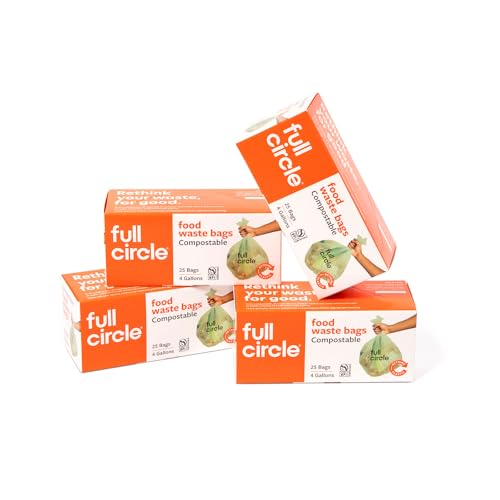
Full Circle offers a plant-based solution with 4-gallon capacity and 100 bags across four boxes. These bags are designed specifically to be plastic-free, using PLA, PBAT, and cornstarch materials that are industrially compostable. They boast leak and tear resistance, reinforced star-sealed bottoms, and BPI certification for industrial composting. By avoiding conventional plastics, they appeal to households pursuing plastic-free waste streams while still handling bulk kitchen scraps efficiently.
Buying Guide
Key considerations when selecting compostable bags for food waste include bin size, composting certification, strength and leak resistance, and storage. Here are practical angles to weigh each option against your needs:
- Bin compatibility: Match bag capacity to your kitchen bin. Smaller bins (1.2–2.6 gallons) require thin, flexible bags, while larger bins (3–4 gallons) benefit from stronger liners with reinforced bottoms.
- Certification and standards: Look for BPI and OK compost HOME/INDUSTRIAL certifications and ASTM D6400 compliance, which indicate real-world compostability in appropriate facilities.
- Strength and leaks: Tear resistance and star-sealed bottoms help prevent leaks and mess during disposal. Consider mil thickness (0.64–0.71 mil is common) for a balance of strength and flexibility.
- Plastic-free options: If you prefer plastic-free liners, plant-based bags (PLA-based) are available, but check composting facilities in your region for acceptance.
- Storage and shelf life: Keep bags in a cool, dry place. Some products note a shelf life of about a year; high heat or humidity can affect material properties.
- Cost and practicality: Count-per-roll, ease of use, and whether bags come with handles influence daily user experience and waste management habits.
- End-use versatility: If you compost at home, home-backyard certifications (OK compost HOME) are particularly helpful. For facility-based composting, INDUSTRIAL certifications ensure acceptance in professional facilities.
Summary at a glance: For compact kitchens, UNNI 2.6 Gal and GreFusion 1.2 Gal offer tight fits and good performance. If you generate heavier waste, SUPERBIO lines with handles provide robust containment, especially the 2.6- and 3-gallon options. Full Circle’s plant-based 4-gallon bags appeal to shoppers seeking plastic-free disposal while maintaining reliability in industrial composting streams. Each choice aligns with different kitchen sizes, waste volumes, and composting facilities, so pick based on bin size, facility acceptance, and personal preference for sustainability.