In the world of kitchen knives, a well-balanced Asian chef knife can transform everyday prep into a smoother, safer task. This guide highlights five top options designed for home cooks and budding professionals alike, focusing on Nakiri, Santoku, and Gyuto styles. Each knife offers high-carbon stainless steel builds, ergonomic handles, and edge retention that makes quick work of vegetables, meats, and herbs. Review the selections below, then use the Buying Guide to compare features and decide which knife best fits your cooking style and routine.
Product Snapshot
| Product | Brand | Key Strengths |
|---|---|---|
| PAUDIN Nakiri Knife – 7″ | PAUDIN | All-purpose Nakiri, razor edge, ergonomic pakkawood handle |
| HOSHANHO 8″ Chef Knife | HOSHANHO | 10CR15MOV core, 62 HRC, hand-sharpened edge, balanced rosewood handle |
| imarku Santoku Knife 5″ | imarku | Ultra sharp edge, anti-stick blade, compact maneuverability |
| HOSHANHO 7″ Nakiri Knife | HOSHANHO | High-carbon steel core, precise straight edge, rosewood octagonal handle |
| imarku Chef Knife 7″ Santoku | imarku | High-carbon stainless steel, 15-18° edge, hollow edge for reduced sticking |
The following sections provide deeper dives into each knife, including what makes them suitable for various cooking tasks, how their construction supports durability, and how their designs affect handling in different kitchen environments.
PAUDIN Nakiri Knife — 7 Inch

The PAUDIN 7-inch Nakiri is designed for vegetable prep, yet its all-purpose profile supports slicing, dicing, and mincing across ingredients. The blade is built from 5Cr15Mov stainless steel, offering a sharp edge with a hardness around 56+ HRC, helping maintain a clean cut through roots and dense produce. The ergonomic pakkawood handle balances the blade subtly at the pinch point, promoting comfortable use over extended prep sessions. This knife emphasizes ease of sharpening and maintenance, making it a practical choice for home cooks who value durability and routine upkeep.
HOSHANHO 8 Inch Chef Knife

This 8-inch Gyuto-style chef knife from HOSHANHO uses a core of high-performance Japanese 10CR15MOV steel, layered with resilient steel cladding to boost corrosion resistance. With a hardness up to 62 HRC, the blade resists dulling and maintains a sharp edge longer than many entry-level models. The knife features a hand-polished edge at approximately 12 degrees per side, intended for precise slices and delicate work. A premium rosewood octagonal handle provides a balanced feel, aligning the knife with natural hand geometry for comfortable cutting in busy kitchens.
imarku Santoku Knife 5 Inch
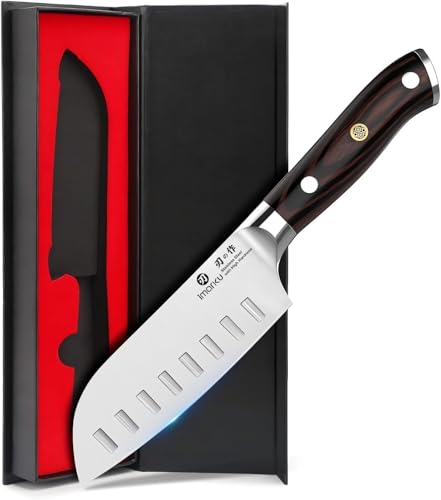
The imarku 5-inch Santoku emphasizes maneuverability and quick, precise cuts. Crafted from German high-carbon stainless steel, the blade resists rust and discoloration while offering a sharp edge. The blade edge is polished to a micro-bevel of about 15-18 degrees per side, sharpening efficiently for routine kitchen tasks. An anti-stick design on the blade reduces drag and sticking, which is particularly helpful when slicing sticky vegetables or delicate proteins. The compact size supports control in smaller prep spaces or for users with smaller hands.
HOSHANHO 7 Inch Nakiri Knife

The HOSHANHO 7-inch Nakiri pairs a straight-edged blade with a high-carbon steel core, reinforced by a multi-layer steel construction (up to 9 layers) and a 10Cr15CoMoV core. This combination yields a blade hardness near 62 HRC, delivering strong edge retention and robust chopping capability for dense vegetables. The octagonal rosewood handle is designed to fit the hand securely, promoting balanced control during prolonged use. The design supports clean, straight cuts ideal for vegetables and other firm produce, making it a strong option for vegetable-forward cooks.
imarku Chef Knife 7 Inch Santoku
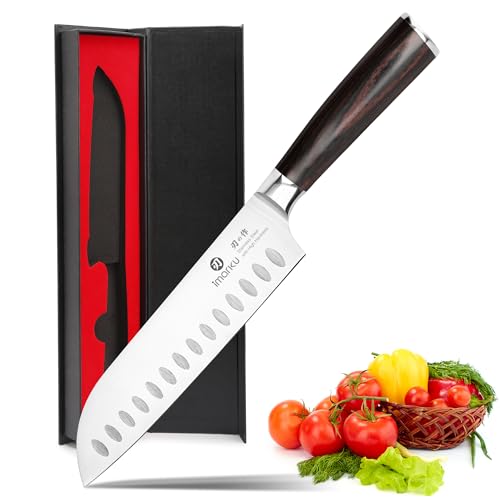
The imarku 7-inch Santoku combines a high-carbon stainless steel blade with a hollow edge, designed to minimize sticking and improve food release during cutting. The blade is polished to a sharp 15-18 degree edge per side, providing a balance of durability and precision for daily kitchen tasks. The handle uses an ergonomic Pakka style with a frame crafted from FSC-certified wood, offering a comfortable grip that supports extended use without fatigue. This knife suits cooks who value a compact, versatile tool for chopping, slicing, and dicing across ingredients.
Buying Guide
- Blade material and hardness: Look for high-carbon stainless steels with hardness in the 56-62 HRC range for a balance of edge retention and ease of sharpening. A steel core plus layered/clad blades can improve durability and corrosion resistance.
- Blade geometry: Nakiri and Uchi-style blades excel at straight-down chopping and vegetable prep, while Gyuto and Santoku designs offer versatile cross-cutting capabilities. Consider your typical tasks to select the most appropriate profile.
- Edge angle and sharpening: Hand-polished edges around 12-18 degrees per side provide a sharp edge suitable for precise work. Knives with easier maintenance or lower sharpening frequency can be beneficial for busy kitchens.
- Handle ergonomics: A comfortable grip reduces fatigue during long prep sessions. Materials like pakkawood or rosewood offer warmth and grip, but ensure the handle shape suits your hand size and slicing style.
- Balance and weight: A well-balanced knife reduces wrist strain. Lighter knives are easier for beginners, while heavier profiles can improve chopping power for dense vegetables and meat.
- Maintenance needs: Some knives are easier to maintain with regular honing and periodic sharpening, while others benefit from professional sharpening. Consider your willingness to maintain your blade.
- Size and versatility: 5–7 inch Santoku and 7–8 inch Gyuto/Nakiri models cover most home tasks. Larger blades offer power for bigger cuts, while smaller blades provide precision and control in tight spaces.
- Credit-free buying considerations: Prioritize reputable brands and warranty coverage. Look for blades with corrosion-resistant coatings or clean steel finishes for easier cleaning.
When choosing an Asian chef knife, align your selection with the foods you prepare most often, your comfort with knife handling, and the maintenance routine you’re prepared to adopt. The options above illustrate a range of styles and constructions designed to meet common home kitchen needs while preserving edge life and cutting performance across daily tasks.