Choosing the right angle for chef knives affects cutting efficiency, safety, and edge longevity. This guide focuses on reliable options that help you achieve precise 15- or 20-degree edges at home. Featured picks span electric sharpeners, manual systems, and angle guides, so you can maintain kitchen blades with minimal effort. Use the summary table to compare core specs at a glance.
| Product | Type | Angle Range | Key Benefit |
|---|---|---|---|
| Chef’sChoice Pro Electric Sharpener (3-Stage, 15–20°) | Electric | 15–20 degrees | Diamond abrasives and precision angle control |
| Chef’sChoice 15XV EdgeSelect (3-Stage, 15°) | Electric | 15° (converts from 20°) | Converts factory edges to 15° with advanced diamond abrasives |
| Chef’sChoice Pronto Hone (2-Stage, 15°) | Manual | 15° | Very fast sharpening and honing with compact footprint |
| SHARPAL 194H Whetstone Guide | Angle guide | 15°–45° | Versatile training tool for consistent angles |
| Mercer Culinary Angle Guide | Angle guide | 15° (training aid) | Ceramic inserts for durable, repeatable sharpening angles |
Chef’sChoice 3-Stage Electric Sharpener: 15–20° Edges
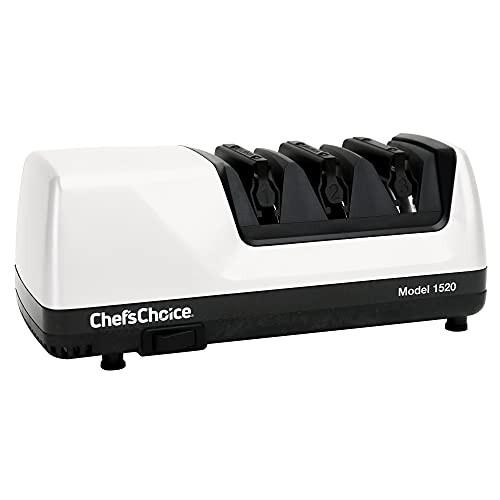
The Chef’sChoice Pro Electric Sharpener offers a 3-stage system designed to produce 15- and 20-degree edges with precision. The ANGLESELECT feature lets users choose a traditional 20-degree edge or a finer 15-degree edge, which is ideal for high-performance slicing and delicate work. Built with 100% diamond abrasives in all stages, the sharpener can sharpen and hone blades quickly while maintaining a longer-lasting edge thanks to its DIZOR ENGINEERED facets. The result is a consistently arch-shaped edge that holds through repeated use, whether you’re prepping vegetables or portioning proteins. It’s suitable for straight-edge and serrated knives alike, making it a versatile choice for a busy kitchen.
Users should note the device’s footprint and power requirements, as this is an electric unit intended for regular use in home kitchens. The 3-stage process, with initial sharpening and honing followed by final polishing, reduces the need for frequent re-sharpening. Its diamond abrasives deliver rapid material removal with controlled wear, helping maintain edge geometry over time. For households that prioritize quick, repeatable results and a durable edge, this sharpener aligns well with 15° and 20° knife angles used by many professional-standard blades.
Chef’sChoice 15XV EdgeSelect Electric Sharpener: 15° Precision
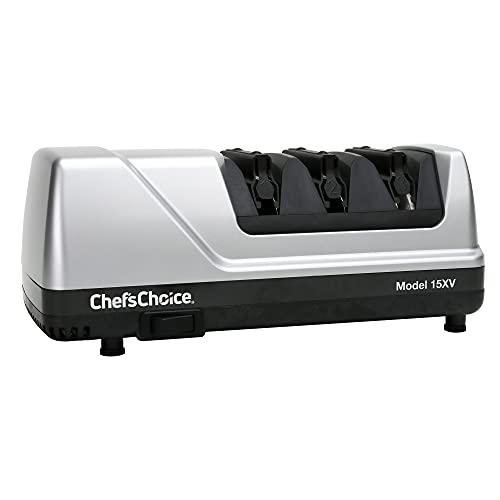
The 15XV EdgeSelect sharpener is engineered to convert traditional 20-degree factory edges into high-performance 15-degree edges, specifically designed for sharper, more precise slicing. It features 100 percent diamond abrasives throughout the sharpening stages and an advanced stropping stage to refine the edge after sharpening. The recommended angle guides help ensure accuracy, while the patented flexible spring guides automatically adjust to maintain correct sharpening angles across a range of blades, including serrated edges. Noise levels sit in a moderate range, making it a practical option for quiet kitchen environments where consistent edge geometry matters for long-term blade health.
For cooks who value chef-grade performance from everyday knives, the 15XV provides a straightforward, repeatable method to upgrade dull blades. The combination of diamond abrasives and precision angle control supports rapid restoration of edge sharpness, while the flexible guides reduce user error. This makes it a strong pick for households seeking a professional-grade result without professional costs, especially when working with a mix of straight-edge and serrated blades.
Chef’sChoice Pronto Hone Manual Sharpener: 15° Edge

The Pronto Hone manual sharpener emphasizes speed and precision in a compact footprint. It delivers a 2-stage sharpening and honing sequence that creates an ultra-sharp 15-degree edge for straight-edge and serrated knives. The arch-shaped edge produced by the two stages adds strength and durability while enabling efficient cutting performance. This device is ideal for kitchens with limited counter space or for travelers who want a reliable edge-maintenance tool without electricity. Its fast action makes it appealing for professional cooks and home enthusiasts who need quick touch-ups between tasks.
While manual sharpeners require a steady hand, the Pronto Hone’s ergonomic design and 15-degree specification help users achieve consistent results. The combination of sharpening and honing stages minimizes the risk of over-sharpening while preserving blade geometry. For those prioritizing a fast, reliable, and compact sharpening solution, this tool offers clear advantages over older manual systems.
Mercer Culinary Angle Guide: Ceramic Precision

The Mercer Culinary Angle Guide is a training aid designed to teach and maintain proper sharpening angles. Made with durable ceramic inserts, it helps sharpeners hold blades at an ideal angle during routine maintenance and restoration. This guide is especially helpful for users who want to cultivate a repeatable technique, whether restoring a dull edge or maintaining daily sharpness. It supports bringing blades back to peak sharpness by providing a consistent reference point for angle control, which can lead to sharper cuts and longer blade life when used correctly.
As a training tool rather than a standalone sharpener, the Mercer guide complements other sharpening systems by ensuring correct angle geometry. It’s well-suited for culinary students, home cooks refining technique, and professionals who want an inexpensive way to standardize angles across multiple knives. When paired with a compatible sharpener, it can enhance overall performance and blade longevity.
SHARPAL 194H Whetstone Edge Guide: 15°–45° Versatility

The SHARPAL 194H is an adjustable angle guide designed to help users set precise sharpening angles across 15° to 45°. It’s described as a versatile tool for beginners and professionals, enabling consistent results on various blade types, including chisels and plane irons. The guide works with sharpening stones or other systems by providing a stable reference, reducing the likelihood of angle drift during sessions. This makes it an excellent companion for anyone learning sharpening or maintaining multiple blades with different angle requirements.
The 194H’s usefulness extends beyond kitchen knives; woodworkers and craftsmen can rely on it for consistent edge geometry. Since it does not sharpen on its own, its value lies in improving accuracy and confidence during sharpening sessions. When used properly, it helps produce sharper, longer-lasting edges across a wide range of blades.
Buying Guide: Key Purchase Considerations
Choosing the right angle tool depends on your knife collection, kitchen workflow, and comfort level with sharpening. Here are essential factors to weigh when deciding among electric sharpeners, manual systems, and angle guides.
Knife Type and Edge Goals
- Electric sharpeners with fixed or adjustable angles suit home cooks who want quick, consistent results for a mix of straight-edge and serrated blades.
- Manual systems excel for enthusiasts who value control and flexibility, especially for premium knives or when preserving blade geometry is critical.
- Angle guides provide learning support and consistency, particularly for beginners or for restoring edges without heavy grinding.
Angle Precision and Adjustment Range
- Consider whether you need a standard 15-degree edge for faster, sharper slicing or a 20-degree edge for durability and tougher cuts.
- Look for products offering automatic angle control, spring-guided adjustment, or clear angle presets to minimize human error.
- If you work with a variety of knives, a device that accommodates a broad range (such as 15°–45°) can be advantageous.
Maintenance, Durability, and Longevity
- Diamond abrasives in sharpeners tend to wear evenly and support longer blade life with less frequent resharpening.
- Angle guides with ceramic inserts are durable and resistant to wear, making them reliable long-term training aids.
- Stone-based guides or whetstones require more maintenance (soaking, flattening), but can deliver exceptional edge quality when used properly.
Ease of Use and Noise Considerations
- Electric sharpeners offer convenience and speed but may produce more noise and require power access.
- Manual sharpeners are quiet and portable but demand a steadier hand and more attention to technique.
- Angle guides provide training support without electricity, making them ideal for classrooms or travel use.
Budget and Value
- High-end electric models with multiple stages typically deliver consistent precision but come at a higher upfront cost.
- Manual sharpeners and angle guides offer affordable, durable options for occasional sharpening and technique practice.
- Evaluate how often you sharpen, your knife quality, and whether you prioritize speed, control, or learning support when deciding.